Healthy Treats

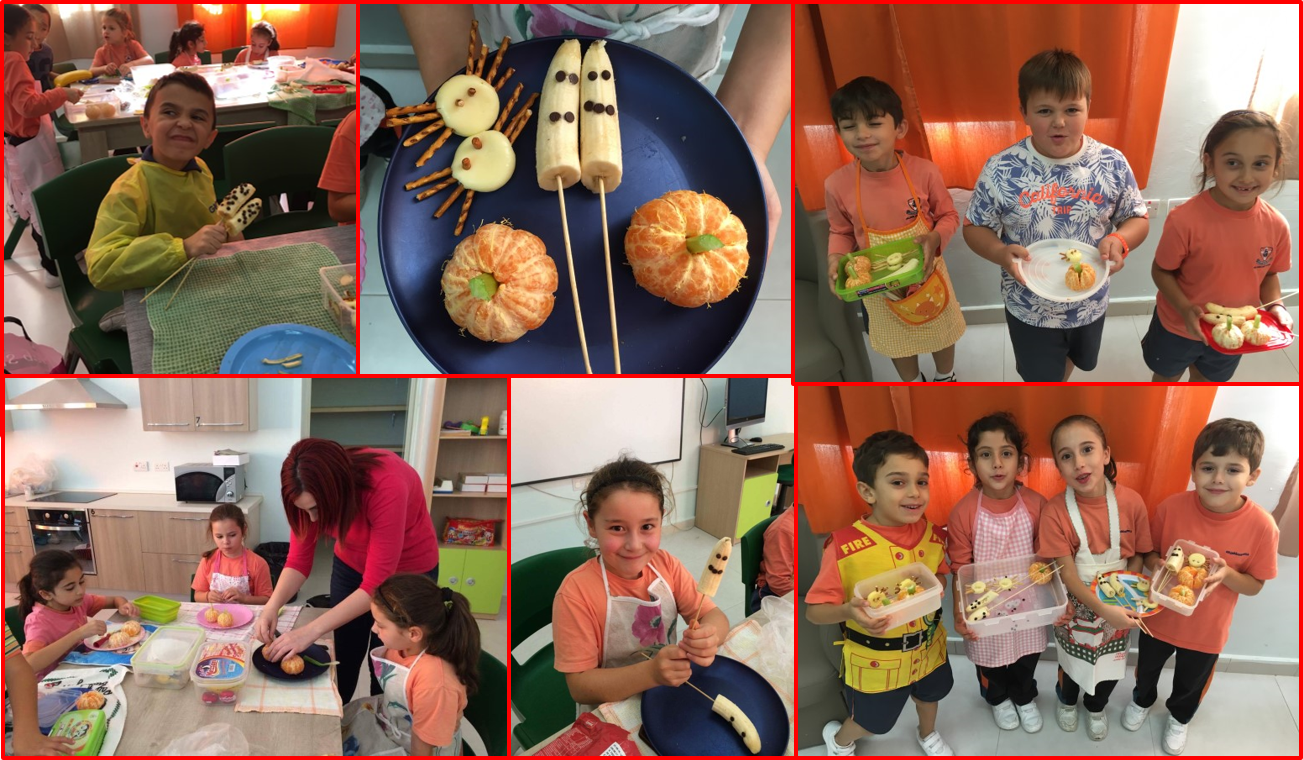
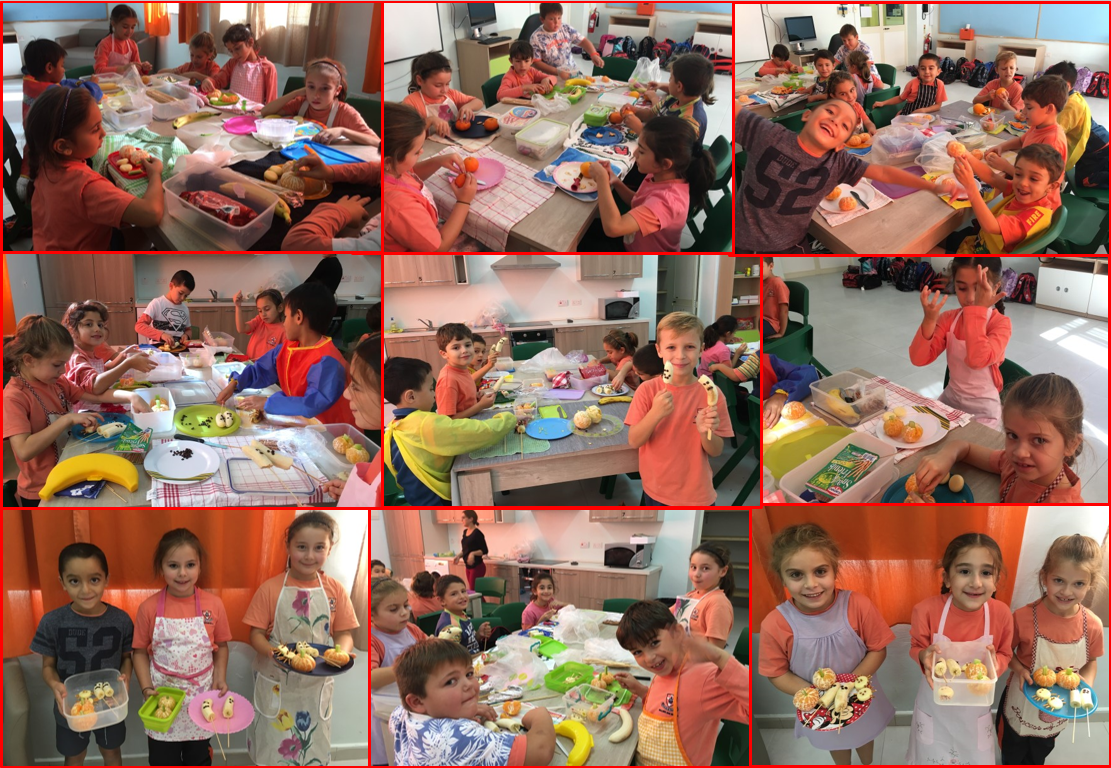
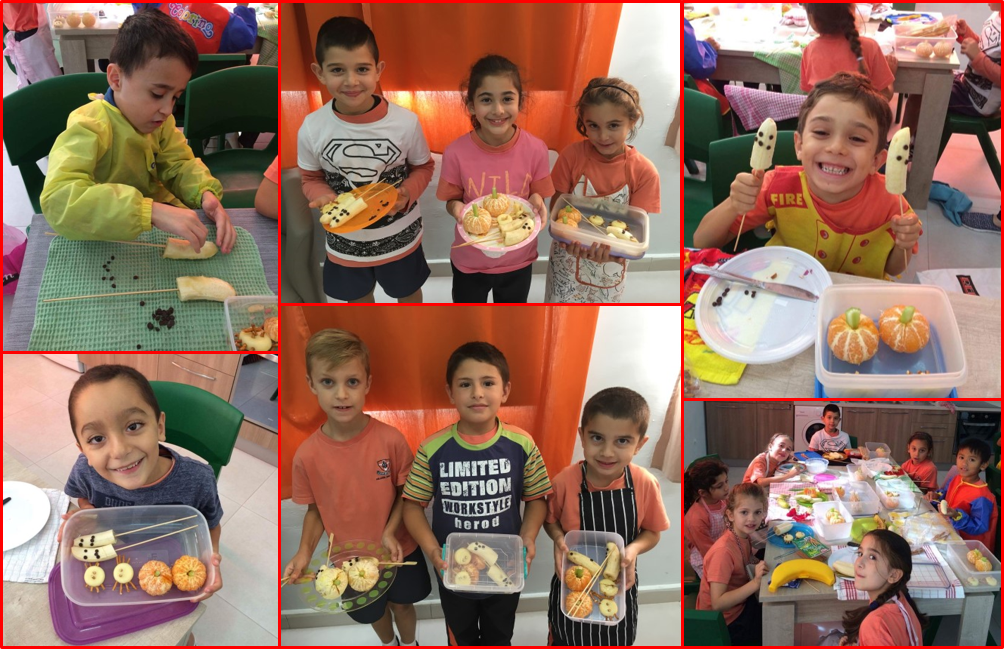
Halloween is just around the corner.  Children love trick-or-treating, even if it means consuming too much sugar.  Therefore the Year 3.1 students prepared some healthy treats which can easily be made at home. 

Using clementines and celery they made small pumpkins.  Banana Ghosts were made using only 2 ingredients: bananas and chocolate chips.  Finally, they made some scary spiders with Pretzel sticks and cheese.


Our little cooks loved doing these treats as well as eating them 🙂


Submitted by Ms Miranda Cauchi, Yr 3.1

Counting Money

During a Mathematics lesson students were divided in groups. Each group was given a handout and some coins.  Students had to use coins to make the amounts written on the Interactive Whiteboard (IWB).  After, each group told the class what coins they used to make the given amounts. These were then written on the IWB.  Students realized that even though some of the groups used different coins they still made the same amount.  Furthermore, they also pointed out which group used the least amount of coins to make the given amounts.  

Submitted by Ms Miranda Cauchi, Yr 3.1

Healthy Breakfast for a Good Start!

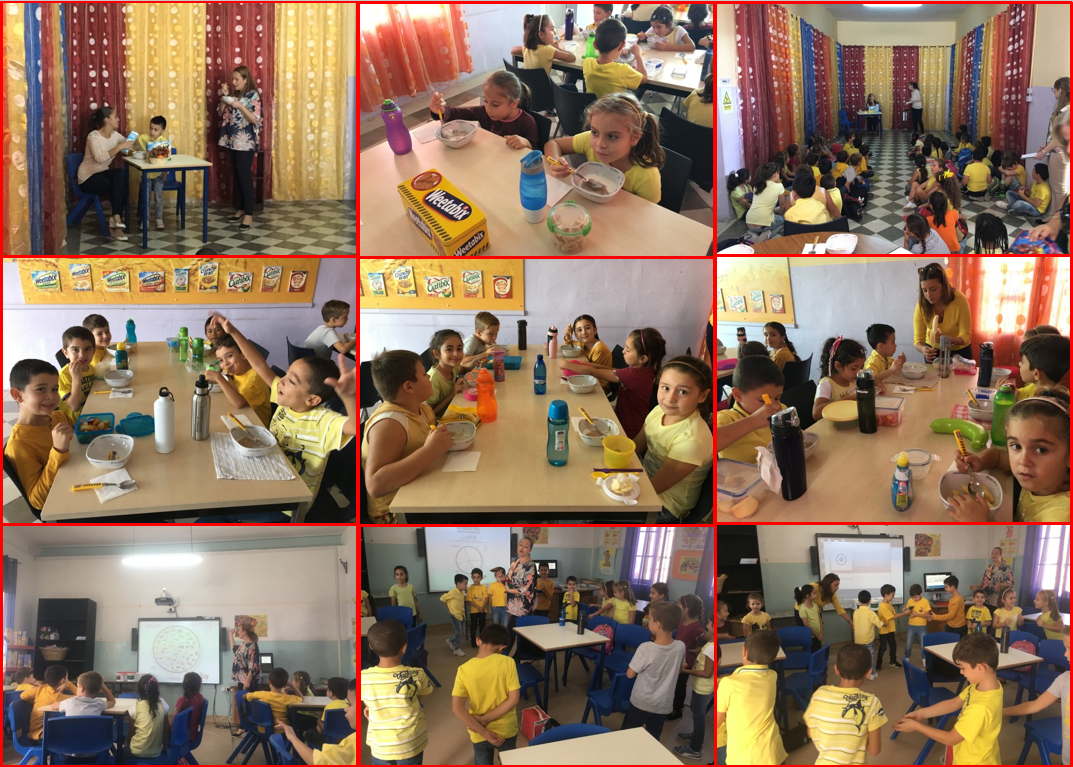
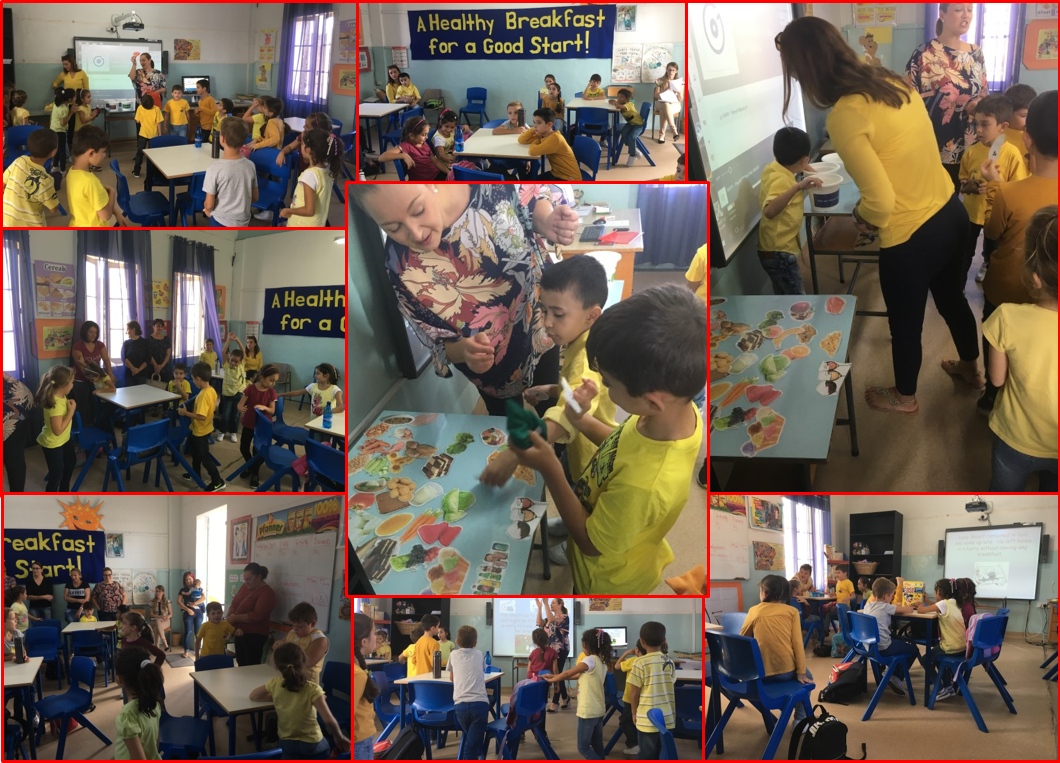
On the 13th of October the Year 3 students of Ms Miranda Cauchi and Ms Sharon Calelja, together with their parents, were invited to attend to a Healthy Breakfast session at the Home Economics Centre in Birkirkara. 

The students, together with their parents, watched a short play about the importance of  a healthy breakfast conducted by the Home Economics teachers.  A meeting followed for parents only.  In the meantime students were given a healthy cereal for breakfast.  Some students also added fresh fruit with their cereal. 

An important session was held for the students.  Among other things, students were introduced to the healthy plate, talked about table manners and other healthy habits and they also learned how to check the amount of sugar each packet contains by checking the nutrition label (e.g. less than 15g sugar per 100g).  Students enjoyed singing, dancing and playing the educational games.

As a success criteria students were asked to draw or write some sentences about the outing.  From their work one can clearly see that students learned a lot during this outing whilst having lots of fun.


Estimation

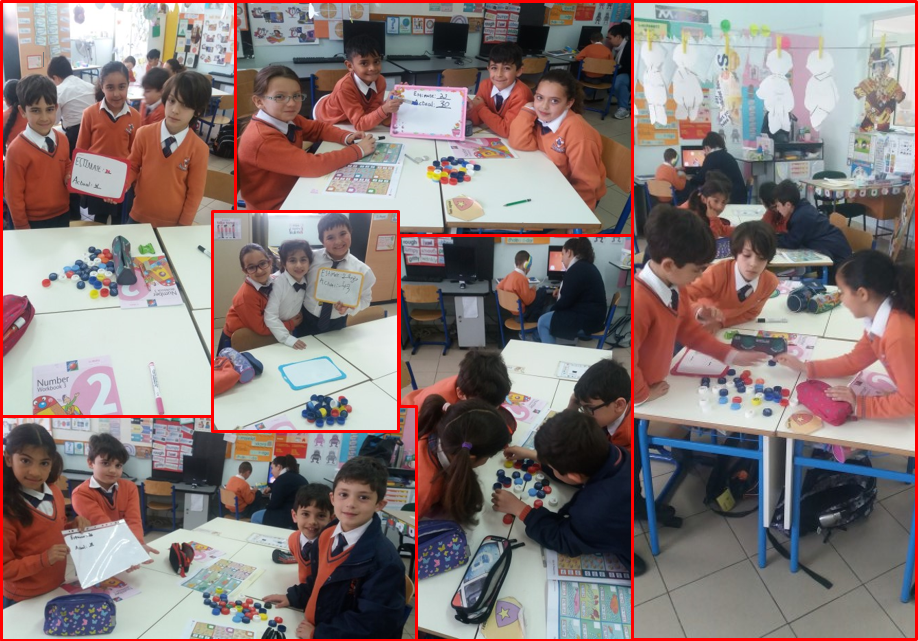
The year 3.1 students were learning about estimation through hands on activities. One of our activities was to guess (estimate) how many bottle caps I placed in a container. The students estimated the number and then, we counted all the bottle caps to verify the actual number and match it to the students’ estimations.

During a similar activity, the students worked in groups. Each group took their desired amount of bottle caps from a box. Their task was to estimate the number of bottle caps and then, count them to check how many there really were.

Submitted by Ms Sharon Calleja, Yr 3.1 Teacher

Malta Post Museum Outing

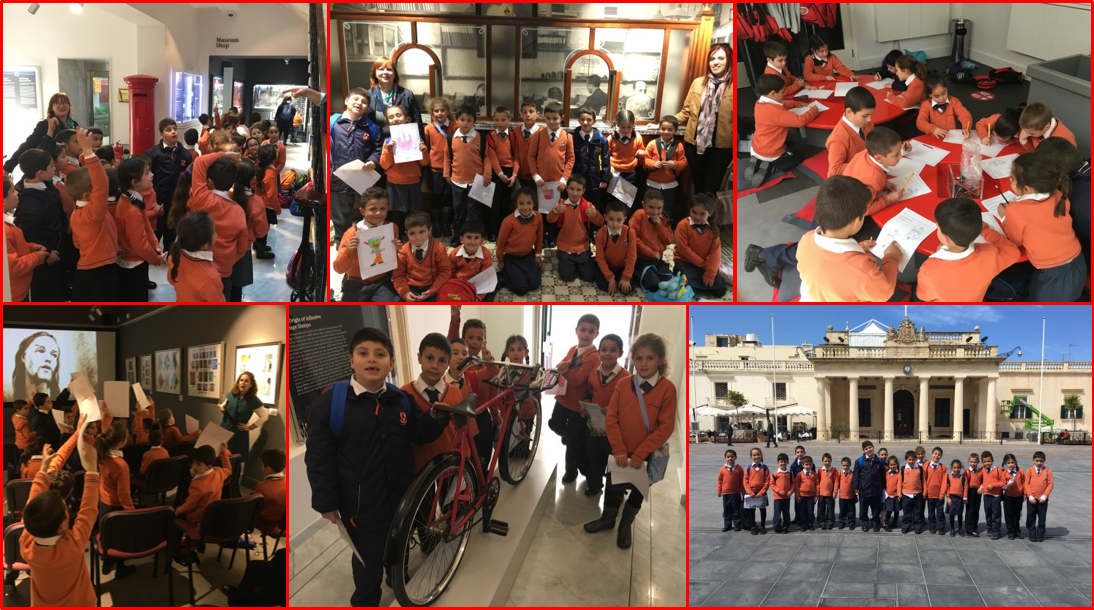
On Friday the 24th of March the two year 3 classes visited the Malta Post Museum in Valletta. There we saw a marvellous collection of stamps and learned about the postal system from its inception to date.  We saw the rare and expensive one penny black stamp and also designed our own stamps. The curator of the museum also showed us the inside of one of the pillar letter boxes as well as an old stamping machine. It was a wonderful and enjoyable learning experience!

Submitted by Ms Sharon Calleja, Yr 3.1 Teacher

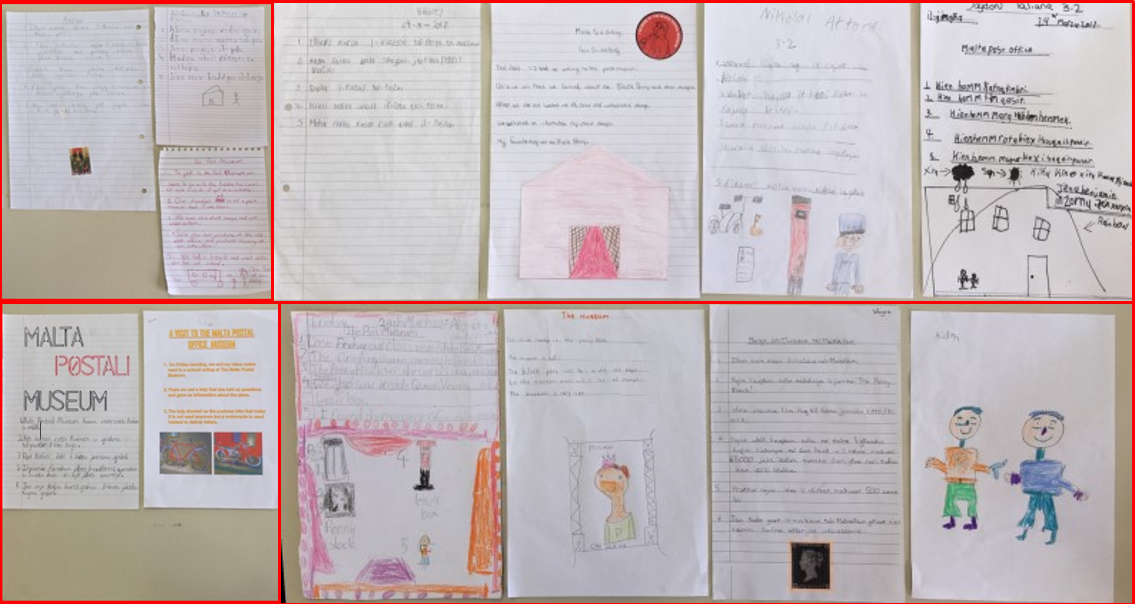
Malta Postal Museum

On 24th March, the Year 3.2 class visited the Malta Postal Museum in Valletta.  A curator guided the students around the museum.  Among other things, students saw the first stamp of the world, a 500 year old letter, Malta’s first stamp, the mode of transport the postmen used throughout the ages and also their uniforms.   

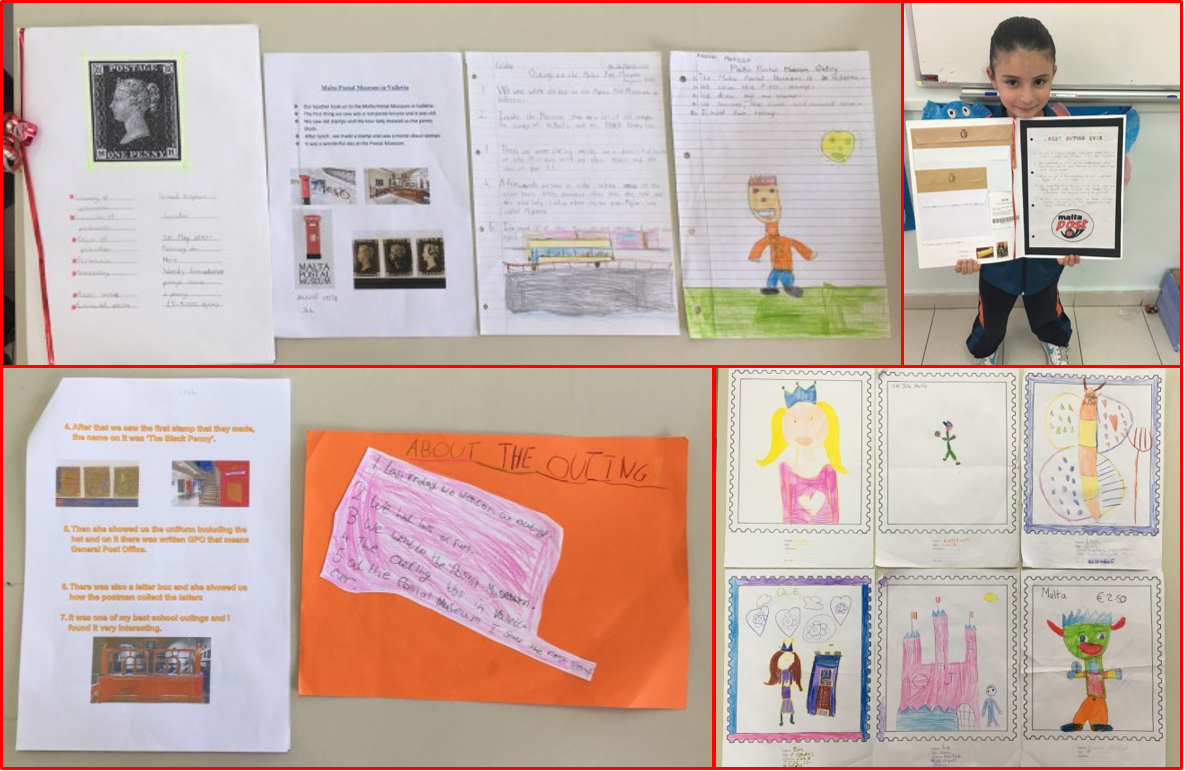
In general, they learned more about the history of Malta’s post.  Indeed, they watched a short video that showed the changes that the stamps and postal offices went through from the period of the Knights of Saint John up till this day.  Students, were also given time to make their own stamps, as shown in the picture below.  The pupils enjoyed the visit and asked several questions to help them understand better what was being explained to them.

 As a success criteria students were asked to write five sentences about this outing.  Their writings and drawings show exactly how much fun they had.


Submitted by Ms Miranda Cauchi, Yr 3.2 Teacher

Diskors (Show and Tell in Maltese)

As part of the Maltese curriculum, the year 3.2 students had several Maltese show and tell lessons to enhance their listening and speaking skills.  Each student had to talk about someone or something they liked/loved. Many students talked about their pet.  In fact, some brought their pets to school on the day of the lesson.  Others talked about their hobbies and favourite toys.  In order to make their session more interesting students made charts, booklets filled with photos, PowerPoints and some brought their favourite toys.  All the class participated during these lessons.  I surely enjoyed listening to each and every one.  Well done!

Submitted by Ms Miranda Cauchi, Yr 3.2 Teacher

Division (as grouping) – yr 3.1

One of our Mathematics topics was division (as grouping). The children participated in group work, during which each group was given a different amount of bottle caps. They had to count how many bottle caps in all and group them according to the instructions given. For instance, one group was given 25 bottle caps and they were instructed to group them into groups of 5. Then, they had to count how many groups were created and write the corresponding division sum i.e. 25 / (division by) 5 = 5. At the end of the lesson, each group presented their work to the rest of the class. It was a fun hands on activity that helped the students understand the concept of division as grouping.

On another day, the students were engaged in a similar activity however, this time, the group members chose the amount of bottle caps themselves. They also chose into how many groups they were going to divide the bottle caps themselves. They discussed this as a team, got the number of bottle caps needed, grouped them accordingly and wrote down the corresponding division sum.

Finally, to make sure that the students understood the concept of division well, they participated in 4 different activities to revise this topic.  All 4 activities were going on at the same time, as the students then, rotated activities after a specified time. The activities were as follows:

  • Beebot game – Moving the Beebot on a division sum, working it out and checking the answer.
  • Board game – Throwing a dice and uncovering a part of the board game with that number. Working out the division sum uncovered and checking the answer overleaf.
  • Matching game – Matching cards with division sums to their correct answers.
  • Handout – as consolidation of the topic.

Submitted by Ms Sharon Calleja, Yr 3.1 Teacher

Kangaroo Relay

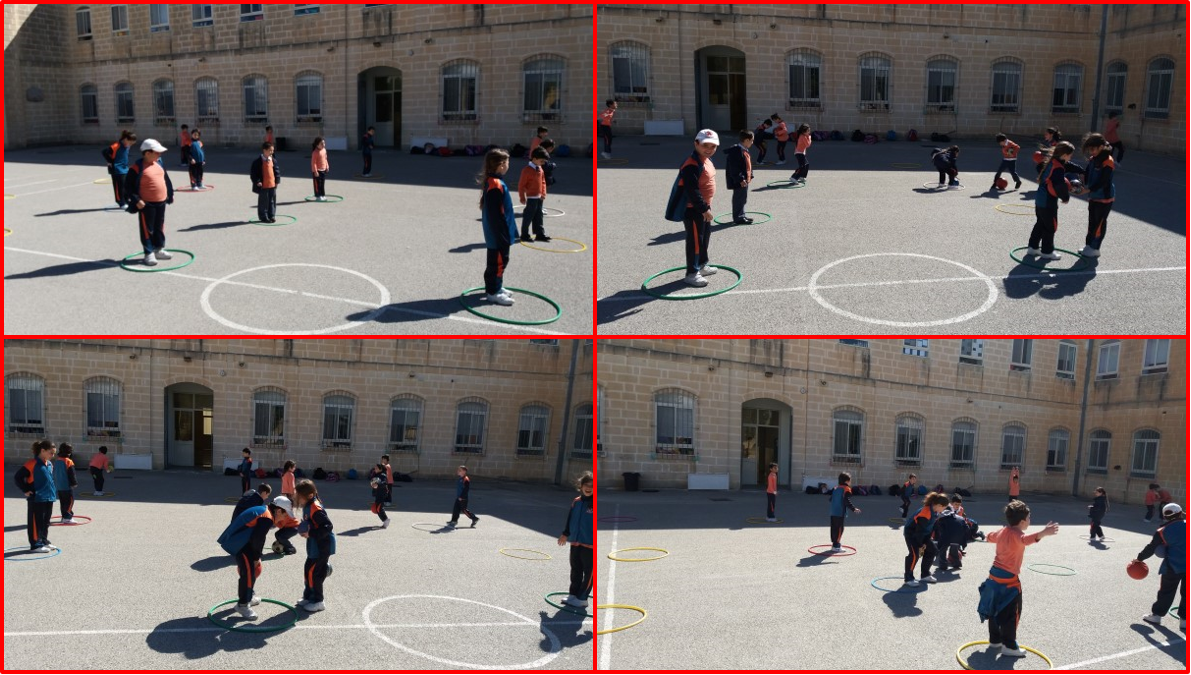
During one of our PE lessons, the students played a game called Kangaroo Relay. It is called this because the children have to hold a ball under each arm and another one between their knees. Then, they have to hop like a kangaroo to the next child in line, who takes all three balls and repeats the process. This relay is completed once all members of the team have had a turn.

Submitted by Ms Sharon Calleja, Yr 3.1 Teacher