Walking Water & Mixing Colours

We started the experiment by filling up 4 clear cups with coloured food colour (Red, yellow, blue and another one with red) and put them about 4 inches apart. Then we put another 3 clear empty cups in between. We grabbed 6 strips of paper towels and placed one end of the each paper towel into the glass with the water and the other end into an empty cup. We repeated this for every cup, thus having 2 paper towel strips in the empty cups. We left the cups sit for a few hours and check on them every hour to see what happened.

The children learnt that water travels up and across the paper towel out of one glass and into another. They could see that the coloured water in the empty cup was a mixture of both adjacent cups’ water.  They learnt that red and yellow made orange, yellow and blue made green, blue and red made purple.

Later on during the week children were given some 3 cups of coloured water – red, blue, yellow and they were asked to create a painting on paper towels. They could see that when the colours touched they changed their initial colour – thus mixing into a secondary colour.

Submitted by Ms Marilyn Bugeja, Yr 1.1 Class Teacher
Weight

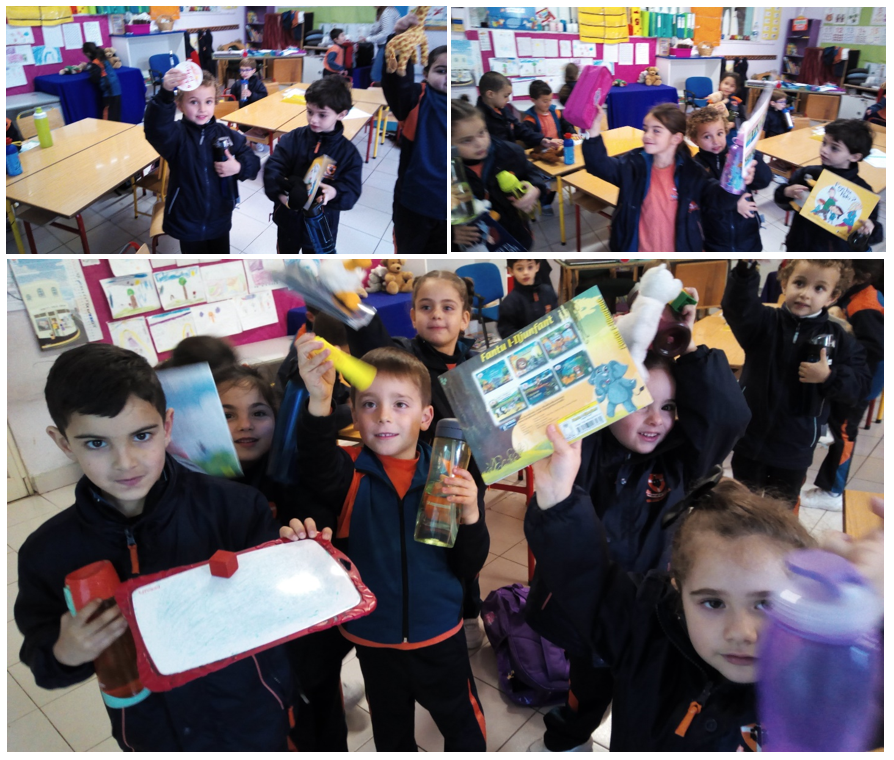
In class we introduced the topic ‘Weight’. After talking about what they knew about the topic, children were asked to take out their drinking bottles and go around the class to find objects which were lighter and heavier than their bottles. They enjoyed this hands on activity as they could clearly understand the difference between heavier and lighter.

Submitted by Ms Marilyn Bugeja, Yr 1.1 Class Teacher
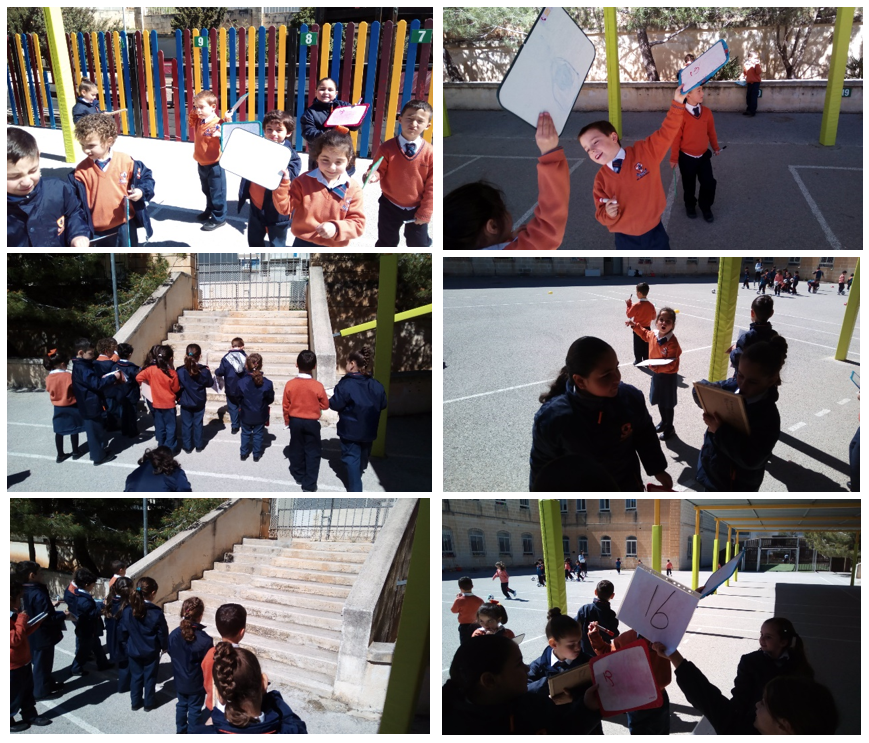
Outdoor Estimation

Today we went outside to estimate the number of objects we have in the school yard. Children estimated the number of trees, steps, number of windows. They wrote their estate on the whiteboard and then counted to check the exact amount of objects.

Submitted by Ms Marilyn Bugeja, Yr 1.1 Class Teacher

Learning through experience

Children started learning about capacity. They learnt new vocabulary related to the topic: full and empty, nearly empty, half full, half empty and nearly empty.  They were give containers and were asked to fill them up in different amounts, and put them in order.

Children were then asked to get their containers from home. They could clearly identify that not all containers hold the same amount of water due to the size of the container.

Submitted by Ms Marilyn Bugeja, Yr 1.1 Class Teacher

English Literacy

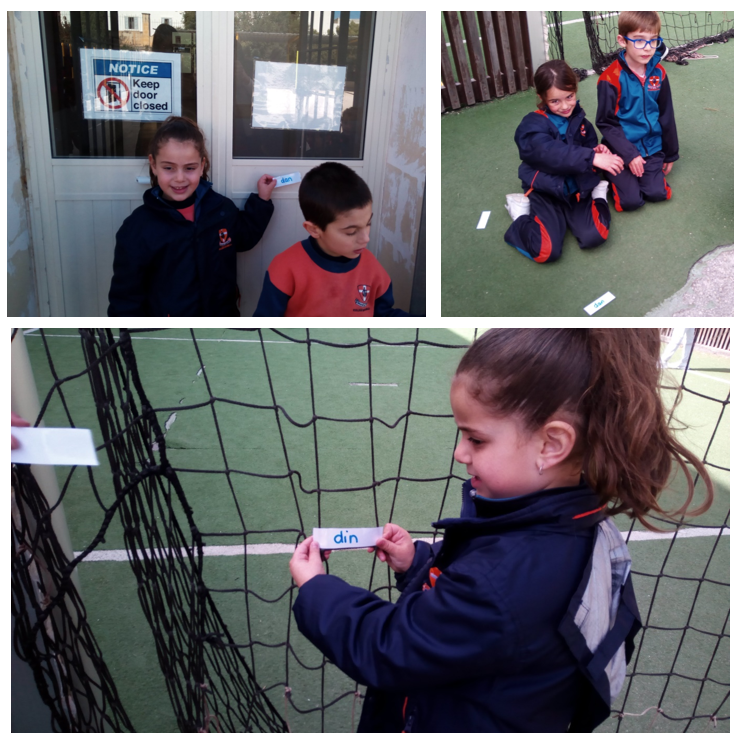
In our class, children are learning new letters and vocabulary in English. They often participate in games and activities which enhance their learning activities. In this activity children matched a picture card to the corresponding initial letter written on bottle caps.

In another game the children played a memory game where they needed to match the letter/word to the corresponding picture. They also played a board game where they are asked to read words and they were also asked to find words starting with particular letter from a given book.

Submitted by Ms Marilyn Bugeja, Yr 1.1 Class Teacher


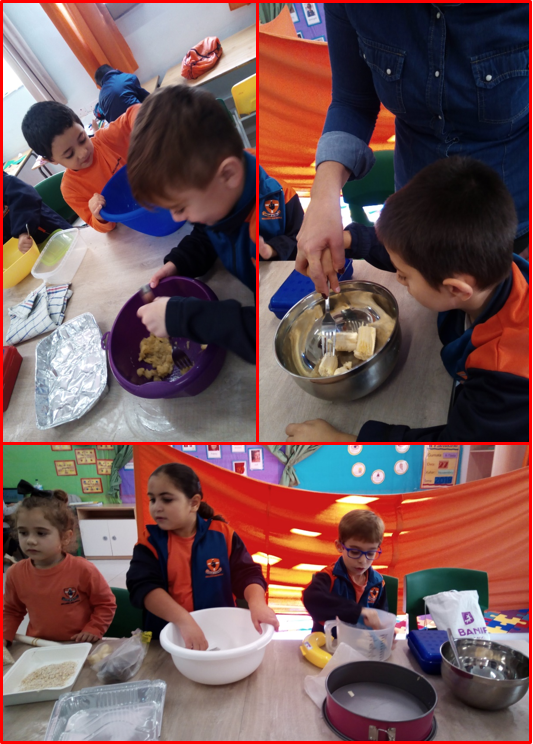
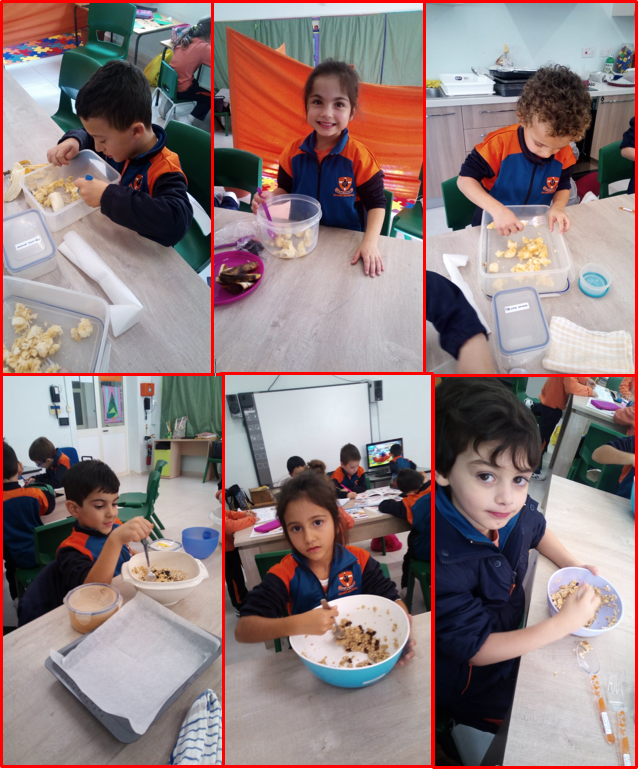
Banana and Oats Cookies

Children learnt that preparing healthy treats can be easy! For these banana cookies, they only needed to mash a banana and add some oats. Then, they added some raising and cinnamon. They left the mixture to sit for about 10 minutes and rolled the mixture into balls. These were flattened out and put them in the oven.

Submitted by Ms Marilyn Bugeja, Yr 1.1 Class Teacher

Number Recognition and Number Value

Children were given different opportunities to learn about number recognition and number value. They used play dough to create the numbers with and blocks to visualise the number value. 

They used bottle caps to make up stories of a given number.

They were often asked to solve problems, such as to create a 4-sided shape with 5 sticks. When they sorted out that they had an extra stick, they came out with different ways of using this extra stick.

When learning about patterns, they were also asked to create different patterns using caps and sticks. Since learning from each other is very important in our classroom, children explained their patterns to their classmates.

Submitted by Ms Marilyn Bugeja, Yr 1.1 Class Teacher