It-tfal tat-tieni sena għamlu pizza b’ingredjenti differenti. Wara kitbu r-riċetta skont dak li użaw.
 Xogħol ta’ Stephanie Azzopardi, għalliema

It-tfal tat-tieni sena għamlu pizza b’ingredjenti differenti. Wara kitbu r-riċetta skont dak li użaw.
Xogħol ta’ Stephanie Azzopardi, għalliema
 Students had pictorial investigations of different equivalent fractions. They had to find out which fractions were equivalent. The pictorial representations helped them to observe that although the numerators and denominators were different from each other they represented the same value or proportion of the whole. Students then worked in groups to join different equivalent fractions together.

Submitted by Ms Mathea Mompalao, Yr 4.1 Teacher
 The school works hard to promote a healthy lifestyle and healthy eating habits. Students were served a portion of pasta with olive oil and tuna, together with a tangerine for desert. Special thanks to the School Council parents and members including our chefs for day, Ritienne Grech Cascun, Roberta Micallef and Joanne Galea 🙂
 Year 1 students enjoyed a fieldwork session in one of the gems of our beautiful locality. The day started off by walking to the Mgarr square for the Maths trail. A short break followed and children enjoyed some time at the swings. On the way to school they visited Ta’ Ħaġrat Temples and continued their maths trail.

Submitted by Ms Louise Cutajar, Class Teacher
 The year 3.1 students had tonnes of fun with fractions! A rectangular cake was used to explain the concept of a whole as well as that of parts of a whole. The students were also given a piece of cake between two and they had to figure out how to cut it in order to have an equal part each, thus cutting it in half.They also watched a video, used visuals, took part in activities on the interactive whiteboard to divide a shape in two equal parts as well as shade one half of the shape and they also used flat shapes to fold into equal parts.
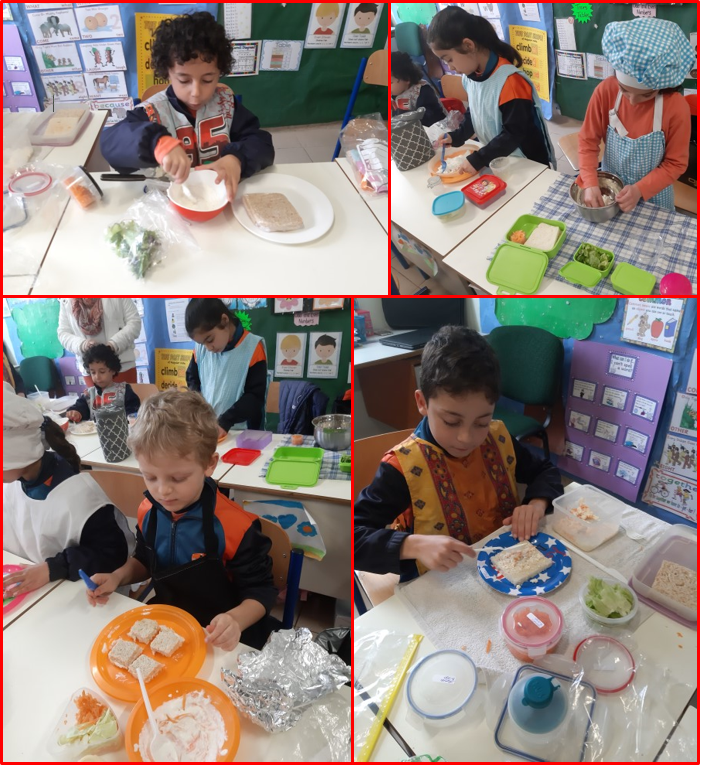
Later on in their fun fractions journey, the students took part in a cooking session to learn about quarters. They prepared a healthy snack. They followed the steps in our recipe to make a ricotta, carrot and lettuce chessboard sandwich with brown and white bread. They cut their sandwich into quarters by cutting it in half first and then, in half again, thus also learning about equivalence i.e. 1/2 = 2/4.
Submitted by Ms Sharon Calleja, Class Teacher
 After learning about money, recognising coins, adding and subtracting money and learning about change, the year 3.1 students turned their classroom into a shop. This gave them the opportunity to practice what they learned in a fun way. They discussed what they wanted to buy in a group setting, agreed upon a budget, ‘went shopping’ in our class shop and mentally calculated how much change they should be given.
 The students were also presented with other hands-on problem solving situations involving money that included the use of receipts, tickets and menus.
Sumbitted by Ms Sharon Calleja, Yr 3.1 Class Teacher
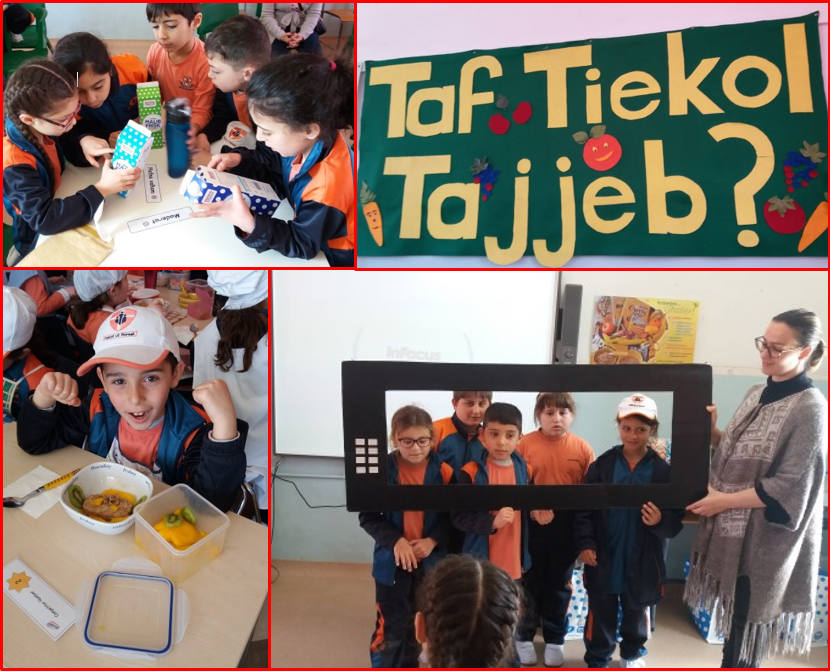
The Yr 3 students visited the Home Economics Centre in B’Kara. There they participated in various activities to learn what a healthy breakfast consists of. They started off by watching a short sketch about the importance of breakfast in the morning and how to choose the healthiest cereal among the variety of cereals available.The students then made their own breakfast which consisted of weetabix with milk. They also decorated their breakfast with fresh fruit. In doing so, they participated in a contest for the best decorated breakfast.
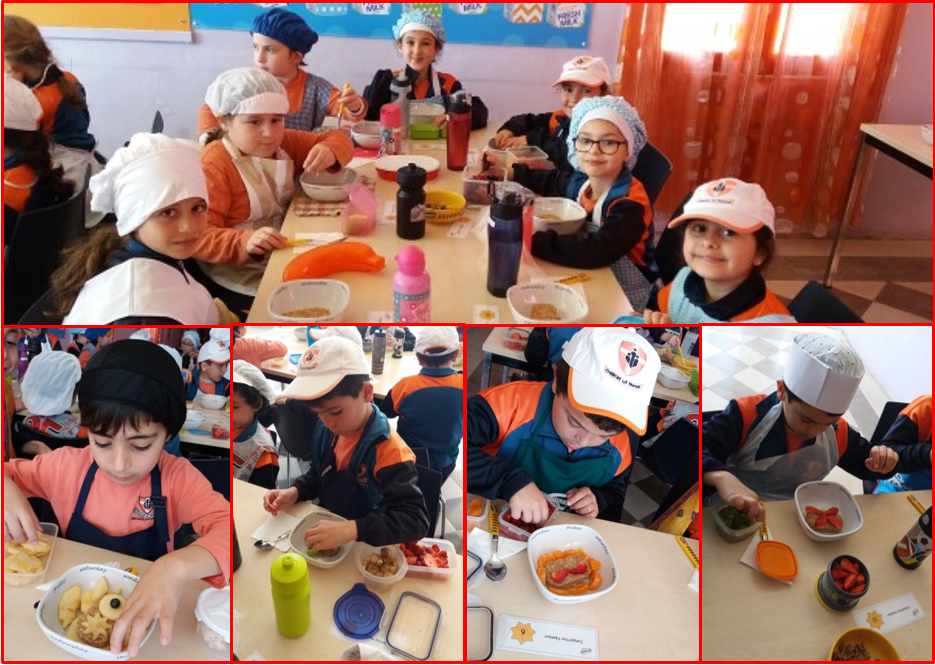 Later, the students learned about the different food groups and participated in games about healthy food. After that, they invented a slogan to encourage people to eat healthily and have a healthy breakfast. Finally, the winners of the contest were given a book in recognition of their abilities.
Submitted by Ms Sharon Calleja, Class Teacher
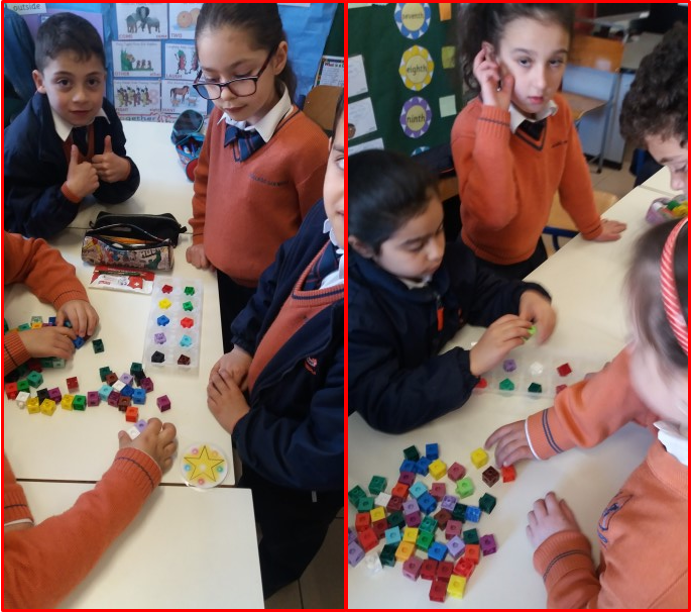
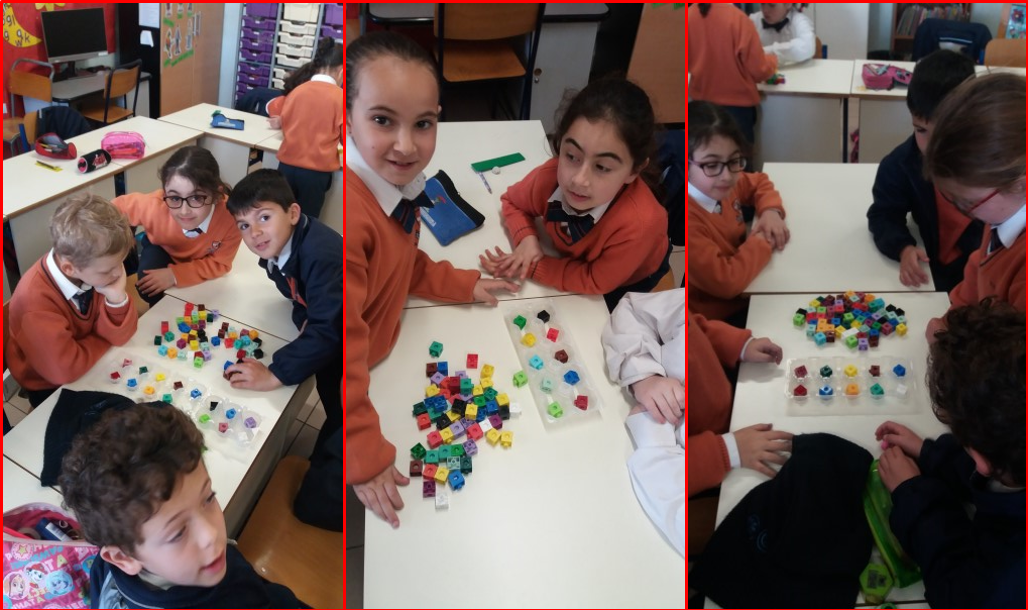 Year 3.1 students had a blast learning the x2 table by means of songs, visuals and hands-on activities.
 Click below for more 🙂
Submitted by Ms Sharon Calleja, Class Teacher
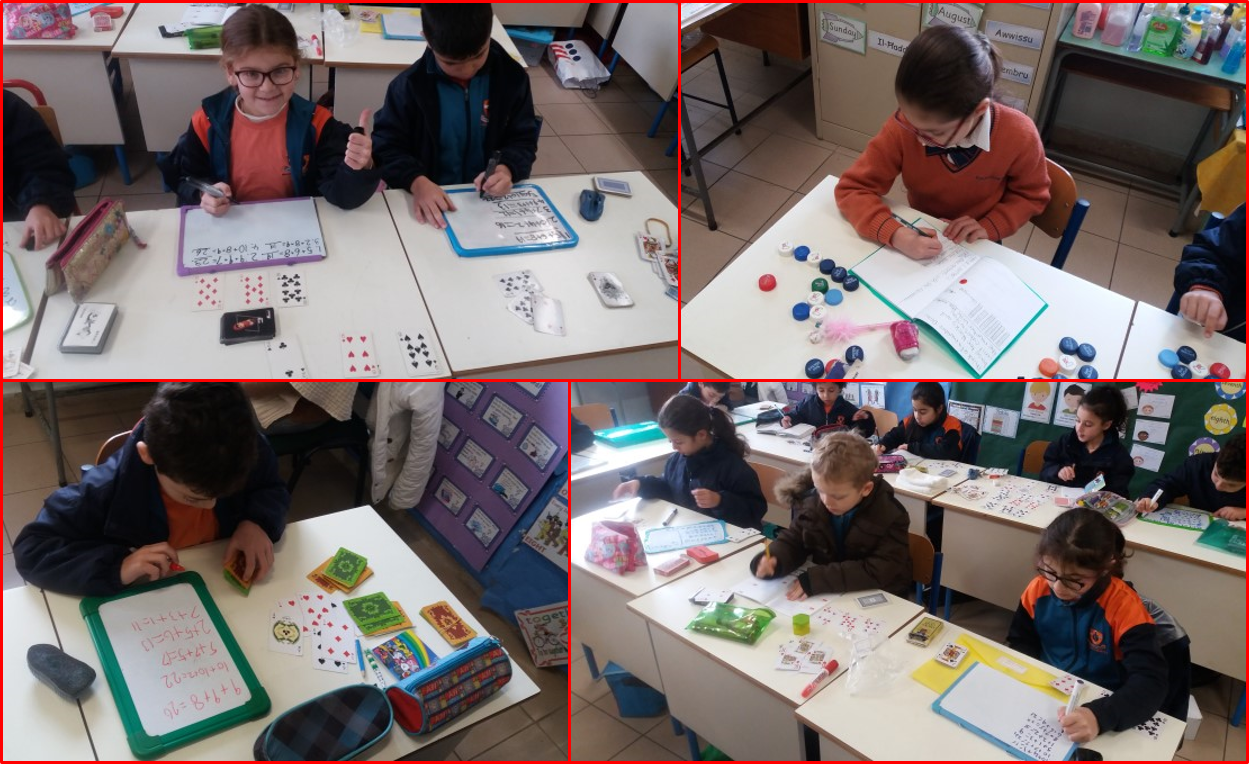
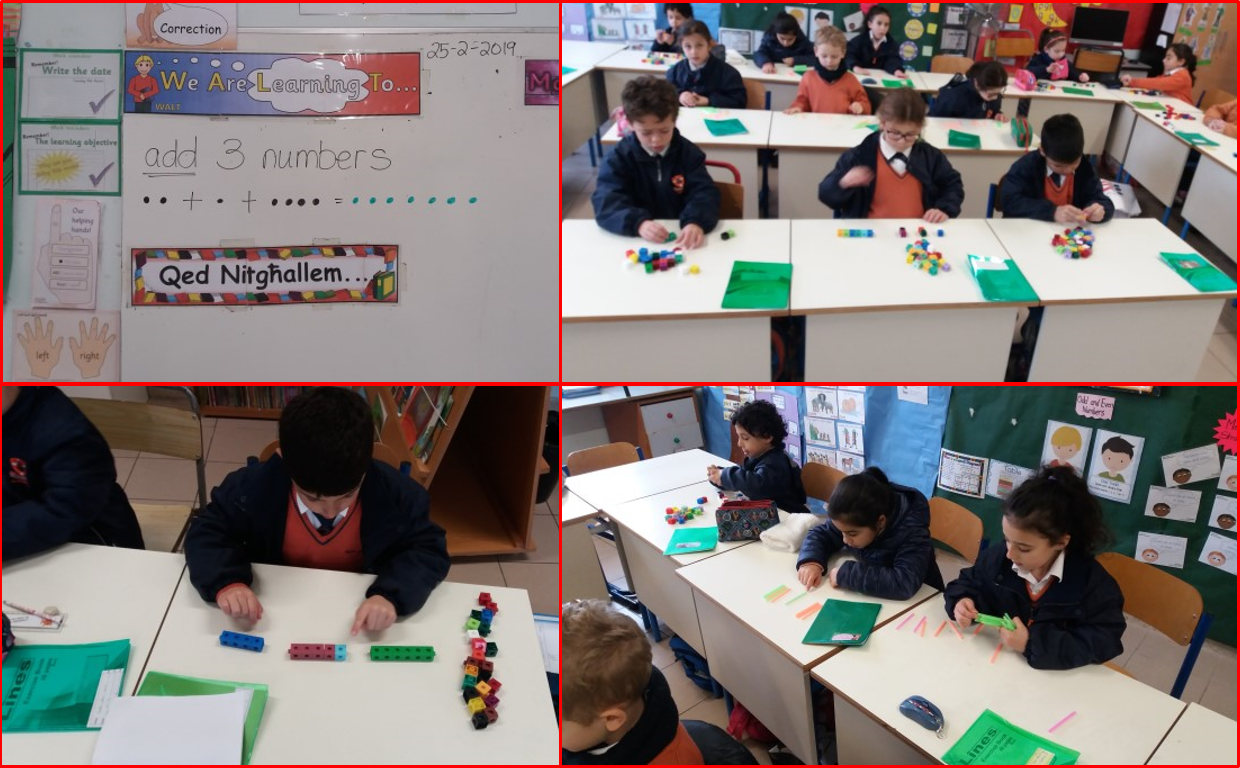 Yr 3.1 students learning how to add three numbers. First, they participated in investigations where they made different amounts with cubes, straws and caps. Then, the students drew shapes as pictorial representations of three different amounts and counted the total. Finally, they moved on to numerical representations of addition sums by means of a game with playing cards.
 Submitted by Ms Sharon Calleja, Class Teacher
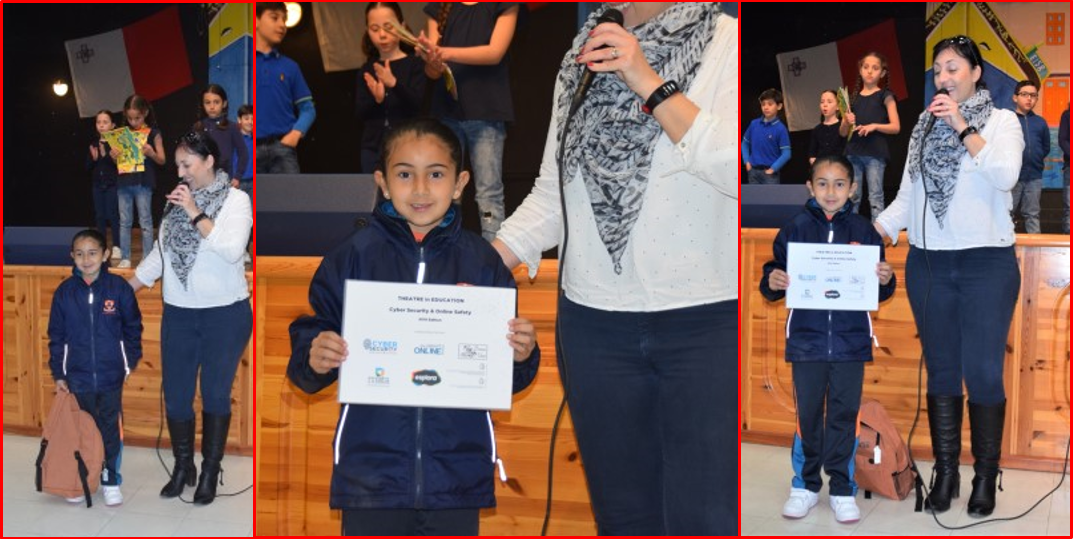
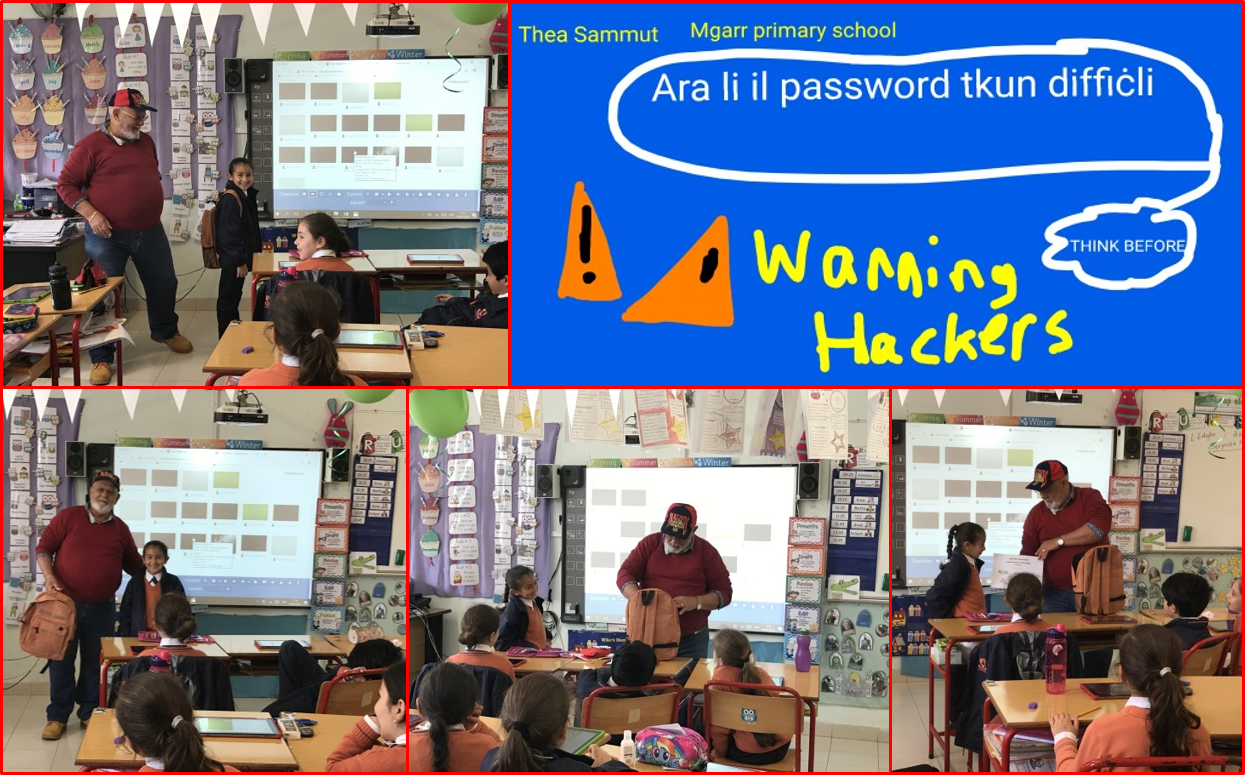 Congratulations to Thea Sammut who is in Yr 4.2 for winning the competition by creating the best poster about Cyber Security using her tablet at Esplora Interactive Science Centre. Well done 🙂