Maths is fun

Year 2.2 students during various Maths activities including: Odd-Even (sorting activities using numbers and dominoes), Weight (discover if an object is heavy, light and find the balance), Building 3D shapes using ice cream sticks).

Ordering (days of the week, months and races to learn about Ordinal numbers), Time(roll the multi faced dice an show the correct time) revision o’clock, Constructing a number using (P.E resources outdoor activity), Pairs of 5 (playing cards, number necklaces) , Find the change from 10c.

Submitted by Ms Stephanie Azzopardi, Class Teacher

Maths Clocks and Right Angles

Students enjoyed a Maths game. Flashcards of numbers from 1 to 12 were placed in the middle of the classroom to represent the clock. The students acted as the clock hand and were given instructions by the others to face a number.

They were then given instructions with right angles or degrees to turn either clockwise or anticlockwise (e.g. Turn 120° or 1 2/3 right angles) and if they faced the correct number, their group was awarded points.

This game helped a lot since the students themselves became an involved part of the activity and were put in the ‘middle’ of the lesson.

A Quizizz activity on the tablets was then carried after as a consolidation of the lesson.

Submitted by Mr Matthew Cassar, Yr 6.1 Class Teacher

Number Recognition and Number Value

Children were given different opportunities to learn about number recognition and number value. They used play dough to create the numbers with and blocks to visualise the number value. 

They used bottle caps to make up stories of a given number.

They were often asked to solve problems, such as to create a 4-sided shape with 5 sticks. When they sorted out that they had an extra stick, they came out with different ways of using this extra stick.

When learning about patterns, they were also asked to create different patterns using caps and sticks. Since learning from each other is very important in our classroom, children explained their patterns to their classmates.

Submitted by Ms Marilyn Bugeja, Yr 1.1 Class Teacher

2D shapes

The Year 3.2 students have been learning about flat shapes and their properties.  Students were shown different plastic shapes and  they had to try and guess their names.  The properties of various shapes were discussed and the related vocabulary and pictures were stuck to the classroom whiteboard.   Then, students had to take a closer look around the class and write down what shapes they could see on their mini-whiteboards.  They also played various games on the interactive whiteboard.

During another lesson students were presented with a PowerPoint Presentation, where they had to try and guess the name of the flat shape that was partially hidden.  Divided in groups, students created flat shapes using lollipop sticks from their Maths Toolbox and sorted real life photos of shapes according to their category.  Furthermore, they listened to clues given by the teacher and programmed the Bee-bot to move on the correct shapes.  Mirrors were also used to find out how many lines of symmetry each shape has.

Finally, during a PE lesson, each group of students listened to clues (properties of shapes) given by the teacher.  Then, they had to guess the shape and  make it using their own bodies.  Students had a blast!

Submitted by Ms Miranda Cauchi, Yr 3.2 Teachers

Maths through PE

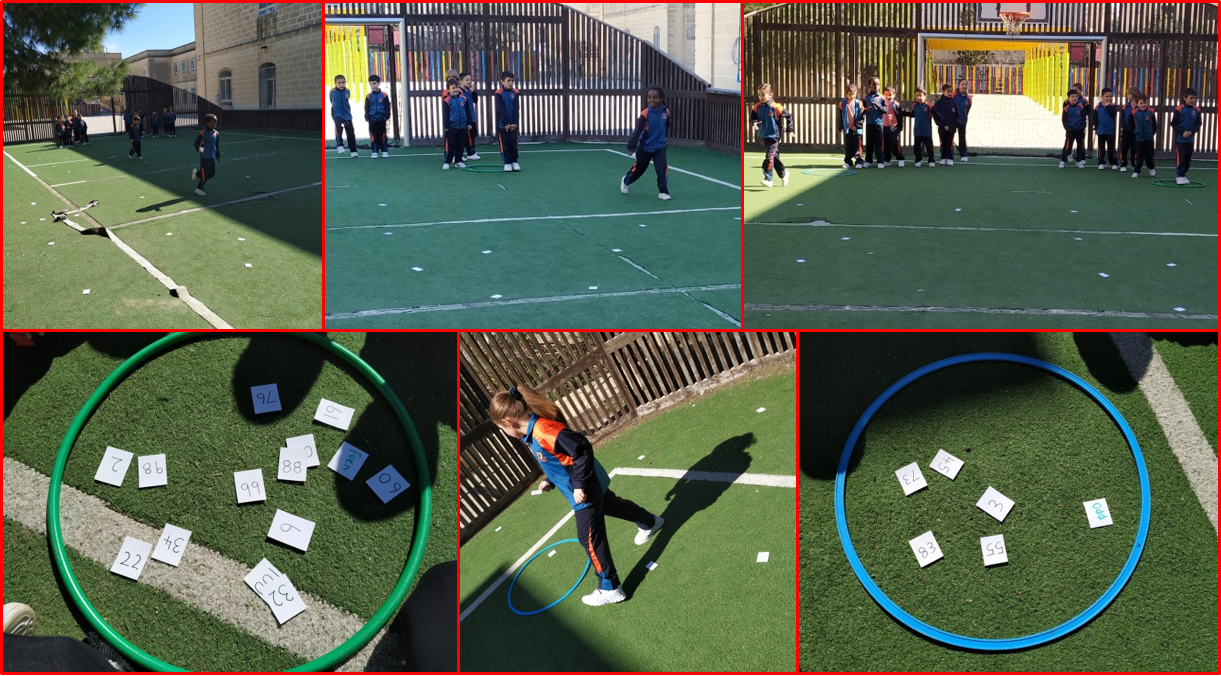
After learning which are the odd and even numbers throughout the week, the children were taken in the pitch. Different numbers ranging from 0 to 100 were spread in the pitch. Even or odd numbers were called out and the child had fetch the number accordingly. Different instructions were given such as: an odd number between 30 and 40. The number then was checked accordingly.

In another game, number cards from 0 to 100 were spread out in the pitch. Children were divided into two groups. Opposite each group two hoops were placed labelled odd and even. The children had 10 minutes to race one after each other, choose a number and place it accordingly in the hoop. When the ten minutes were over the numbers were revised together and points were given according to how many numbers were placed correctly.

Submitted by Ms Janice Vella Muscat, Yr 2.1 Class Teacher


Fun Maths games – Learning through play

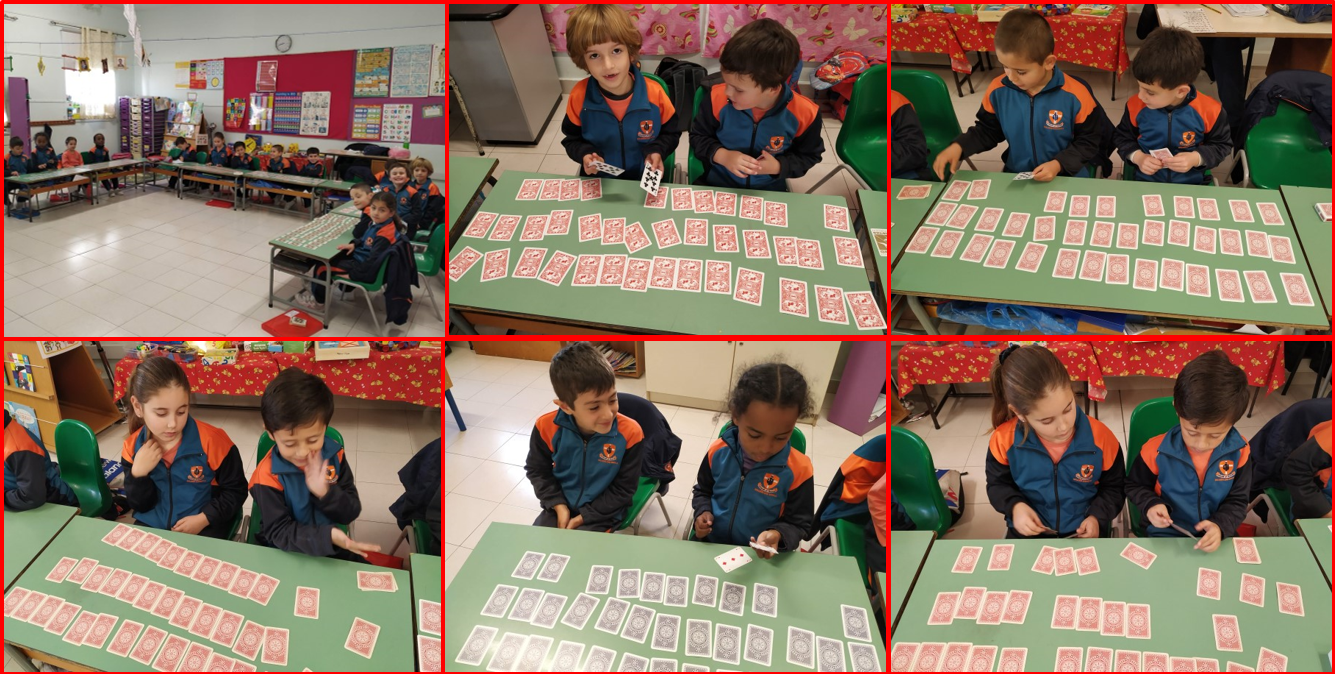
This week the Yr  2 students are learning odd and even. After reading the story of “Odd Todd and Even Steven” students classified the numbers from 1 to 10 according to odd or even.

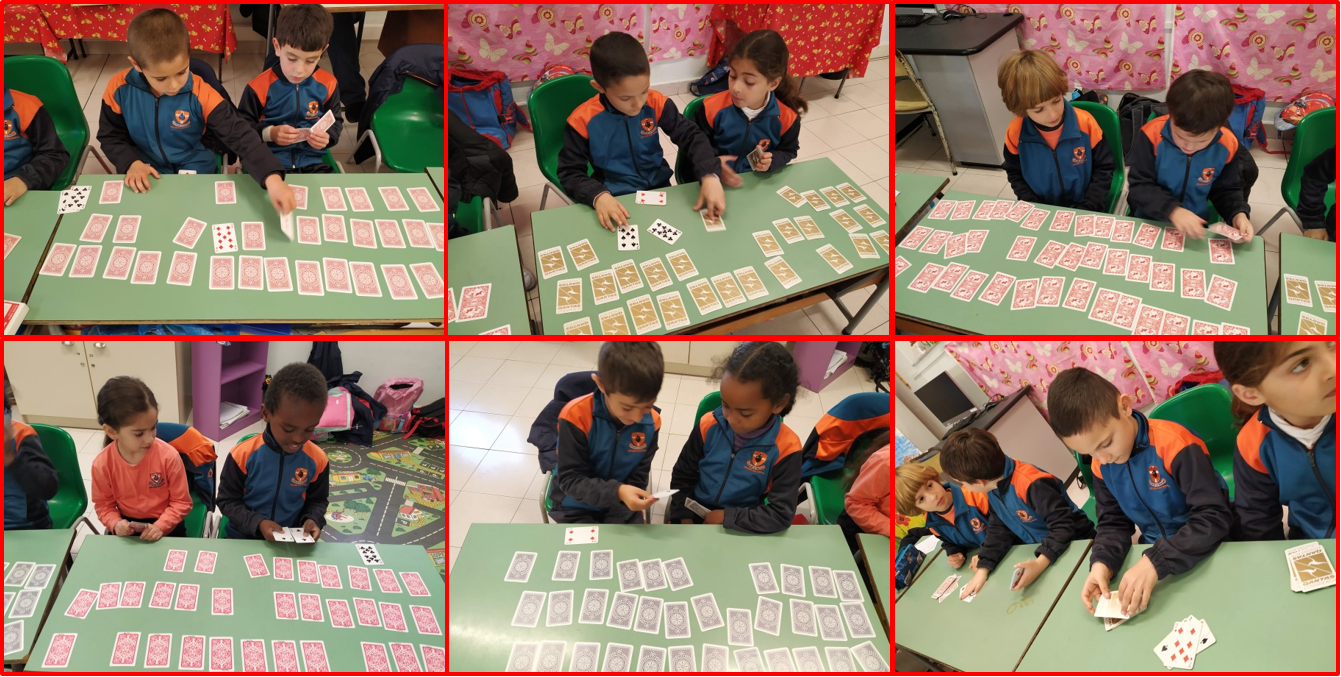
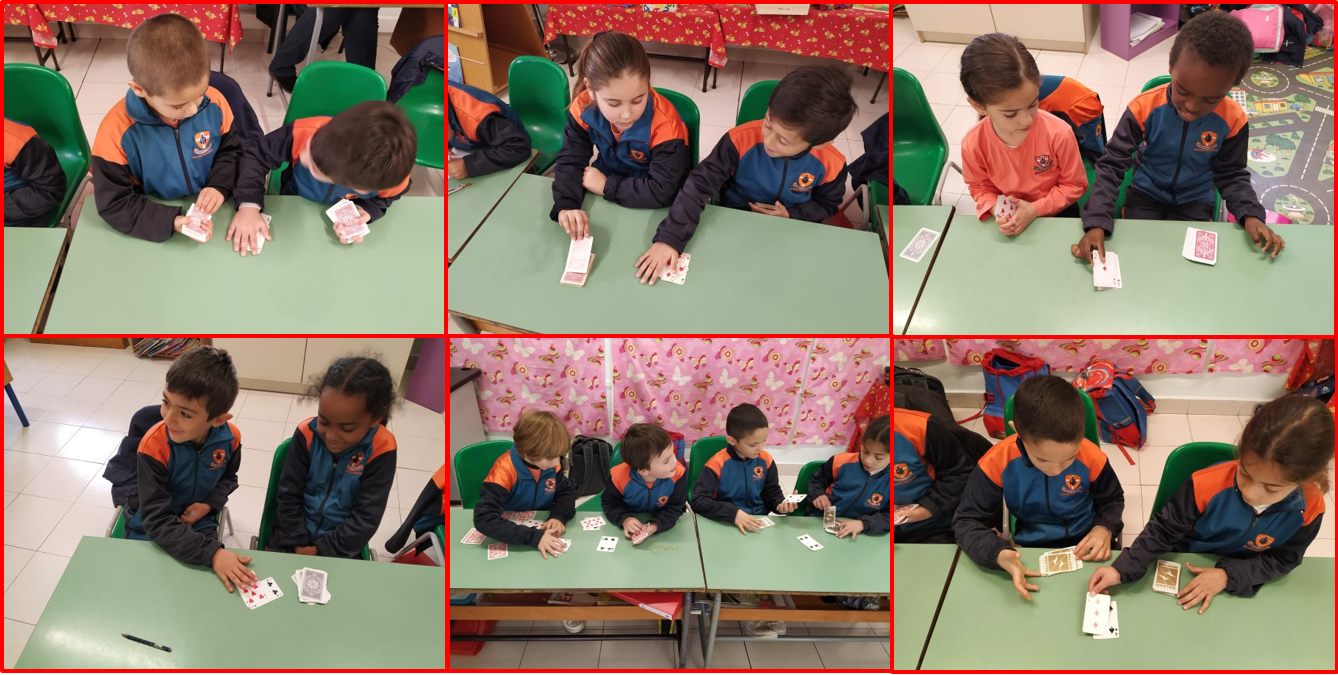
In pairs the children played two card games.

First card game was a memory game – the children had to collect the cards if both cards turned were odd or even and leave them there if not the same.

Second card game was snap – the children had the cards distributed equally between them. They had to call snap when two odd or two even numbers were on top of each other.

Submitted by Ms Janice Vella Muscat, Class Teacher

Flat shapes

It was so much fun for the year 3.1 students to learn about flat shapes and their properties.

After singing along to the 2-d shapes song, the students participated in a discussion about finding 2-d shapes in real-life objects found in their everyday lives.

The students made flat shapes with play dough and formed shapes on geometric boards too.  They had a blast making shapes and pictures with parquetry as well as colouring a house made from different 2-d shapes.

Finally, the students listened to clues given by the teacher and then, they moved the Bee Bot on the correct flat shapes.

Submitted by Ms Sharon Calleja, Yr 3.1 Class Teacher

Perimeter and Area Activity

Spaghetti and Meatballs for all- a mathematical story about optimizing area and perimeter…

The story is about The Comforts inviting 32 people for lunch. We see Mrs Comfort hiring 8 square tables to seat 4 at each table.  However, as the guests begin to arrive and they start putting the tables together so that they sit together, we see that although the area remains the same, the perimeter doesn’t!
We practiced the seating with square cut-cut-outs for a whole class activity and discussion. Later we used square bits of paper to recreate different ways of arranging the tables on our Maths Journal.  After that we progressed to draw different combinations of using the same area but different perimeter.
We also applied this to real life situations as seen in restaurants and big family gatherings.
Submitted by Ms Sharon D’Amico, Yr 6.2 Class Teacher

Adding Three Numbers using Tens Frame and Caps

The children used caps in 3 different colours to work out additions with 3 numbers. They had to create sums with the first two numbers adding up to 10 and topping up with the next colour.

Afterwards they created their own sums with caps and formulated the sum on their mini whiteboards.

Submitted by Ms Janice Vella Muscat, Yr 2.1 Class Teacher