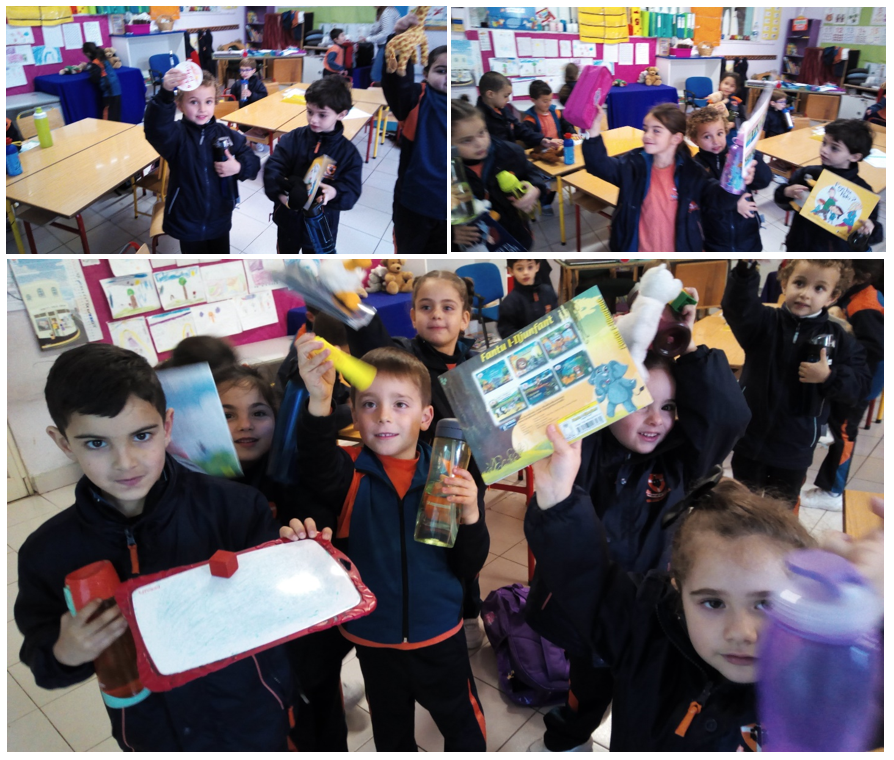
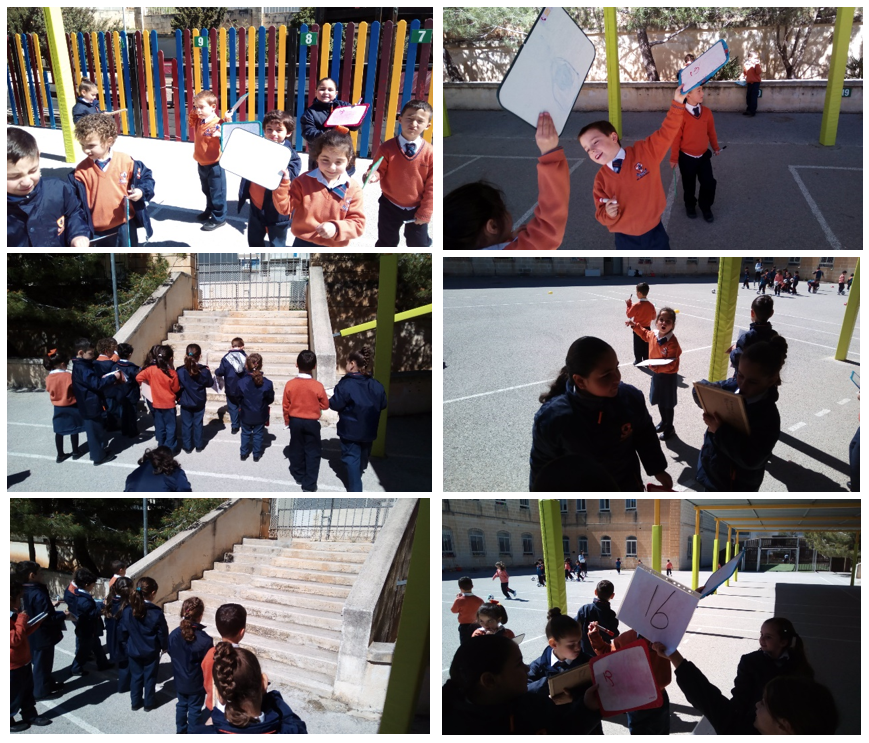
The year 3.1 students had tonnes of fun with fractions! A rectangular cake was used to explain the concept of a whole as well as that of parts of a whole. The students were also given a piece of cake between two and they had to figure out how to cut it in order to have an equal part each, thus cutting it in half.They also watched a video, used visuals, took part in activities on the interactive whiteboard to divide a shape in two equal parts as well as shade one half of the shape and they also used flat shapes to fold into equal parts.
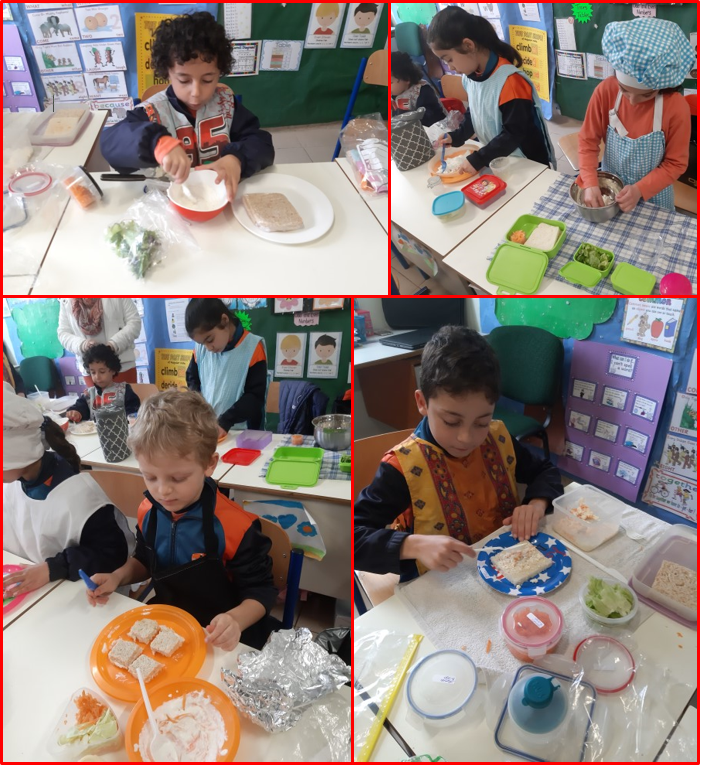
Later on in their fun fractions journey, the students took part in a cooking session to learn about quarters. They prepared a healthy snack. They followed the steps in our recipe to make a ricotta, carrot and lettuce chessboard sandwich with brown and white bread. They cut their sandwich into quarters by cutting it in half first and then, in half again, thus also learning about equivalence i.e. 1/2 = 2/4.
Submitted by Ms Sharon Calleja, Class Teacher

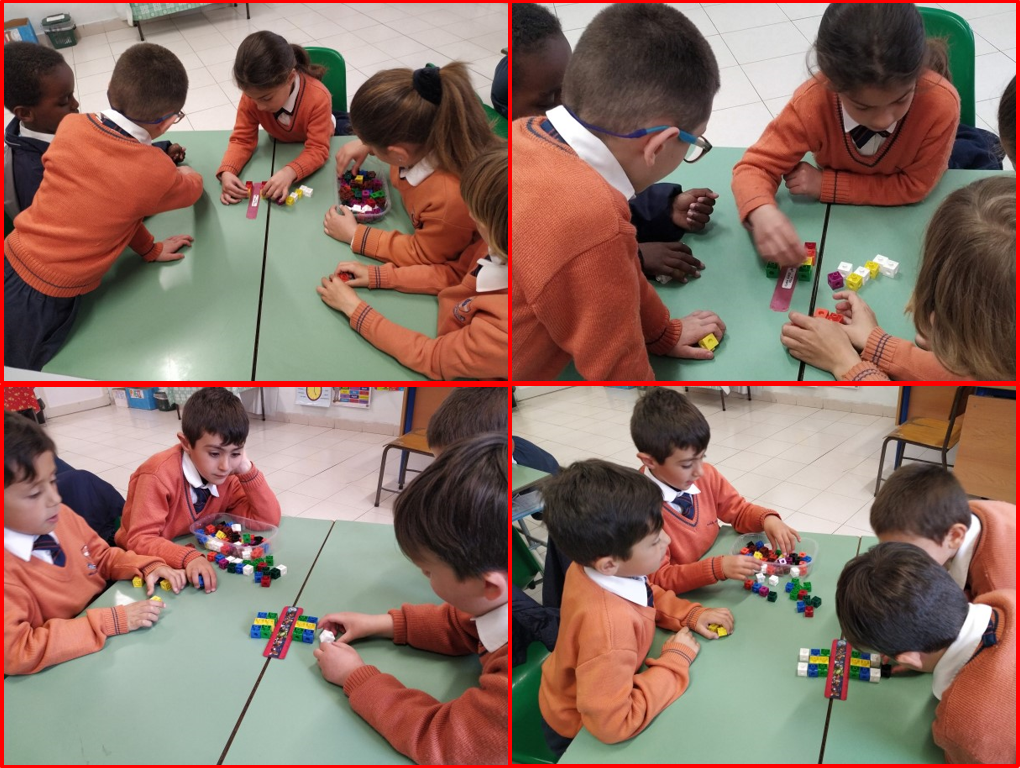
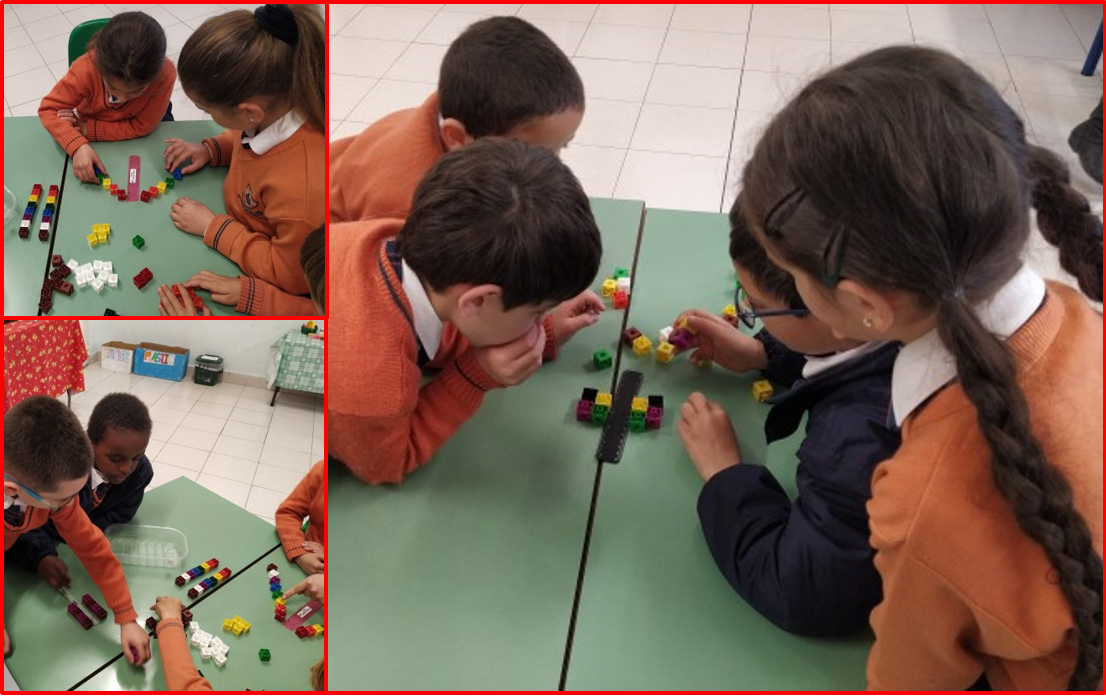
 Students had pictorial investigations of different equivalent fractions. They had to find out which fractions were equivalent. The pictorial representations helped them to observe that although the numerators and denominators were different from each other they represented the same value or proportion of the whole. Students then worked in groups to join different equivalent fractions together.