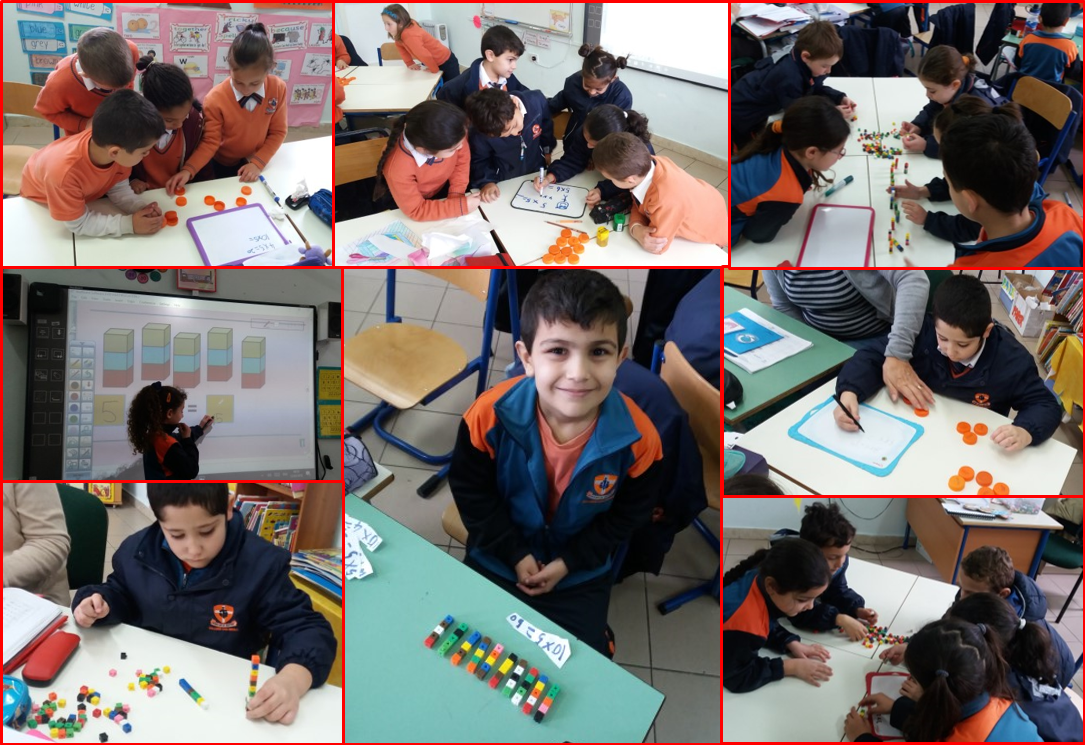
Learning by doing helps children understand mathematical concepts better.
Here the year 3.2 students can be seen taking part in different hands on activities whilst learning about multiplication.
Submitted by Ms Sharon Calleja, Yr 3.2

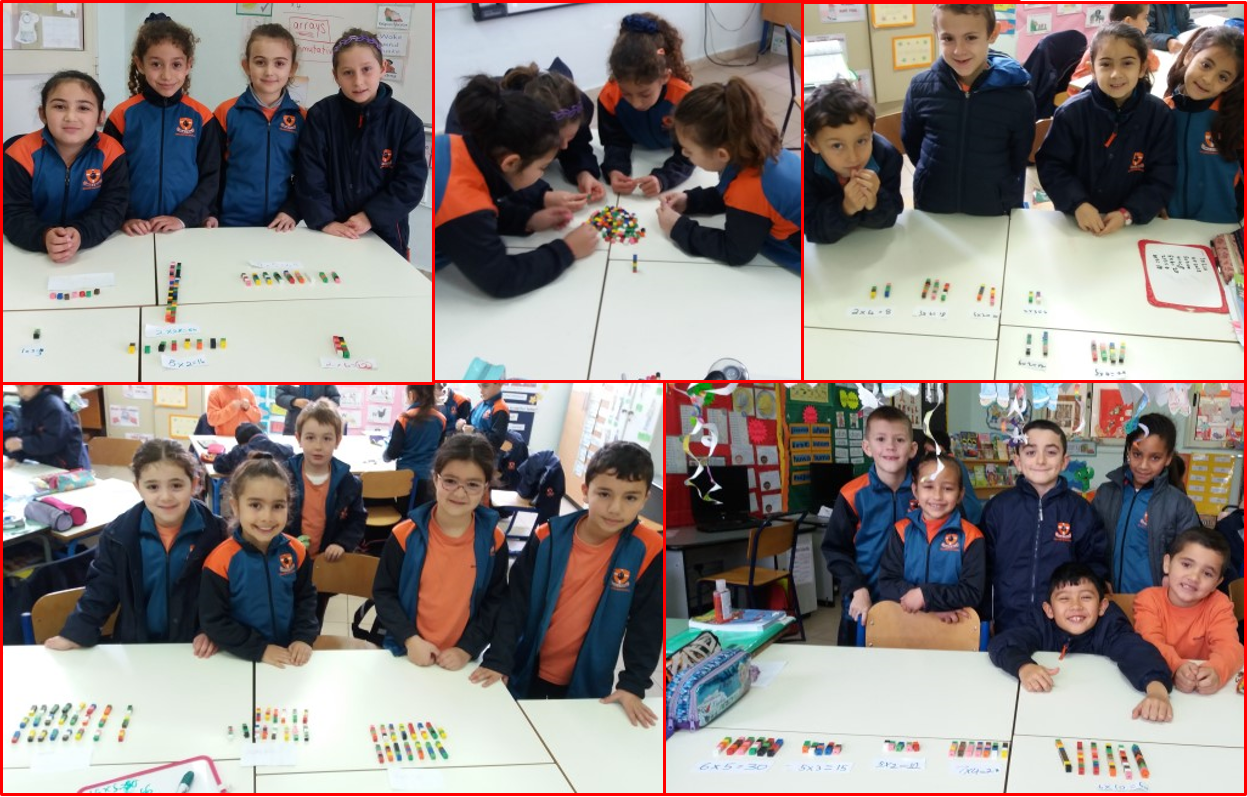
Learning by doing helps children understand mathematical concepts better.
Here the year 3.2 students can be seen taking part in different hands on activities whilst learning about multiplication.
Submitted by Ms Sharon Calleja, Yr 3.2
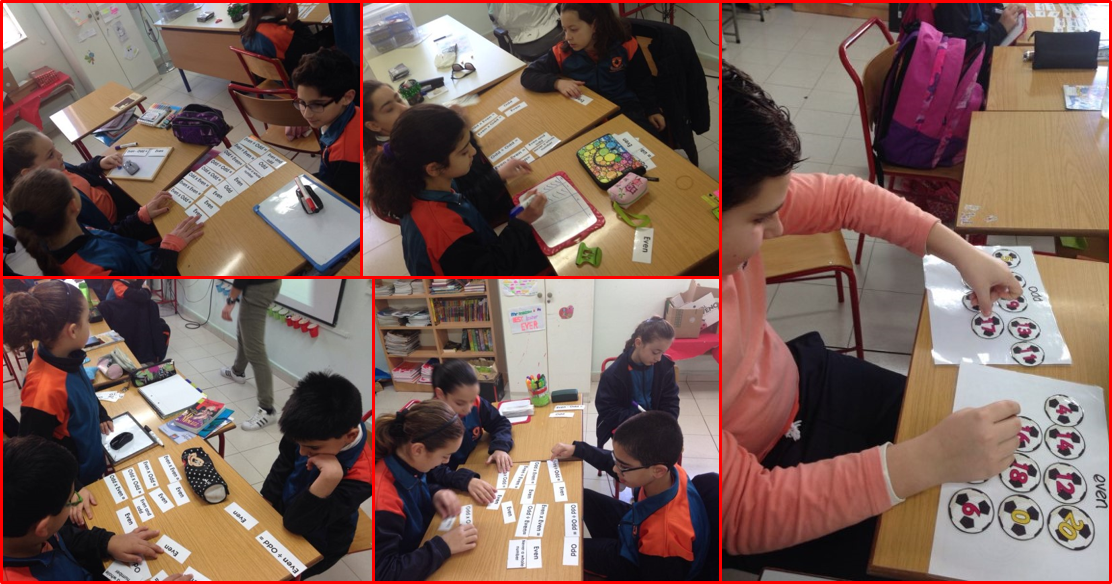 Year 6.1 students during a maths lesson learning about odd and even, while truly understanding what make a number either odd or even.
Submitted by Mr Matthew Cassar, Class Teacher
Students in year 3.2 were busy discovering what weight is by means of concrete and hands on activities.

They learned about mass by means of pictures, discussions, PowerPoints, predictions, experiments, comparisons and by handling different objects and weighing them to determine which was lighter or heavier.
They had the opportunity to see and use a scale as well as a balance with weights of different masses up to 1Kg.
They each held different objects and weights with different masses to determine if they were light or heavy. They compared the weight of these objects, predicted which one would be heavier/lighter and then used the balance to check.
The students held a 1Kg packet of pasta to feel its weight and also used its equivalent in weights to understand what 1000g/1Kg actually feels like. This also helped them in determining whether something was lighter or heavier than 1Kg.
All in all, learning about weight was a pleasurable experience!
 Submitted by Ms Sharon Calleja, Teacher
 The kindergarten students of Ms Janice Vella having been learning about numbers and their value during numeracy lessons held at school. The students were given tins and students had to place the correct number of items according to the number. They also had to recognise the numbers.
 Whilst learning about pairs to 10, the tudents used bottle caps, in an investigation, to determine which are the number pairs that make 10. Using concrete objects helps the children to learn by doing. It also enables them to understand the concepts being taught better. Then, the students moved on to pictorial representations of the pairs to 10 and finally, they also worked out sums (pairs to 10) mentally as well as with written methods.
Submitted by Ms Sharon Calleja, Teacher (Yr 3.2)
Whilst learning about money the students in the year 3.2 class handled coins in order to observe and discuss their size, shape, colour as well as the amount that each coin represents.They handled coins to make different amounts of money. Then, they participated in a group activity during which they counted the amount of money in different purses.

In another activity, the students used coins to make a given amount using the fewest coins possible.The students also investigated different ways to make the same amount of money. For instance, one could make 5c with five 1c coins, with two 2c coins and one 1c coin, with one 2c coin and three 1c coins, and so on.

During another day, the children used coins to determine how many they would need to make a specific amount. For example, they used 10c coins to determine that they needed 10 of them to make €1 (100c).
Learning about money was so much fun!
Submitted by Ms Sharon Calleja, Teacher (Yr 3.2)
 Kindergarten students made their own bongos. These were used to learn counting while banging on their bongos and creating music. Students enjoyed using the number line to sort numbers according to value.
 Submitted by Ms Janice Vella, Kinder 2.2

Whilst learning about adding 10 and other multiples of 10 the year 3.2 students were visited by Incy Wincy spider. He showed them how to add 10 by jumping along on the number grid. He also showed the students how to add 20, 30 and 40 by using the number grid as well as other methods. One of these methods included using bottle caps to add 10 to a given number and playing a board game to add 10, 20, 30 and 40. The students also practiced adding 10, 20, 30 and 40 mentally and writing their answer on their mini whiteboard for immediate assessment and feedback.
Submitted by Ms Sharon Calleja, Yr 3.2
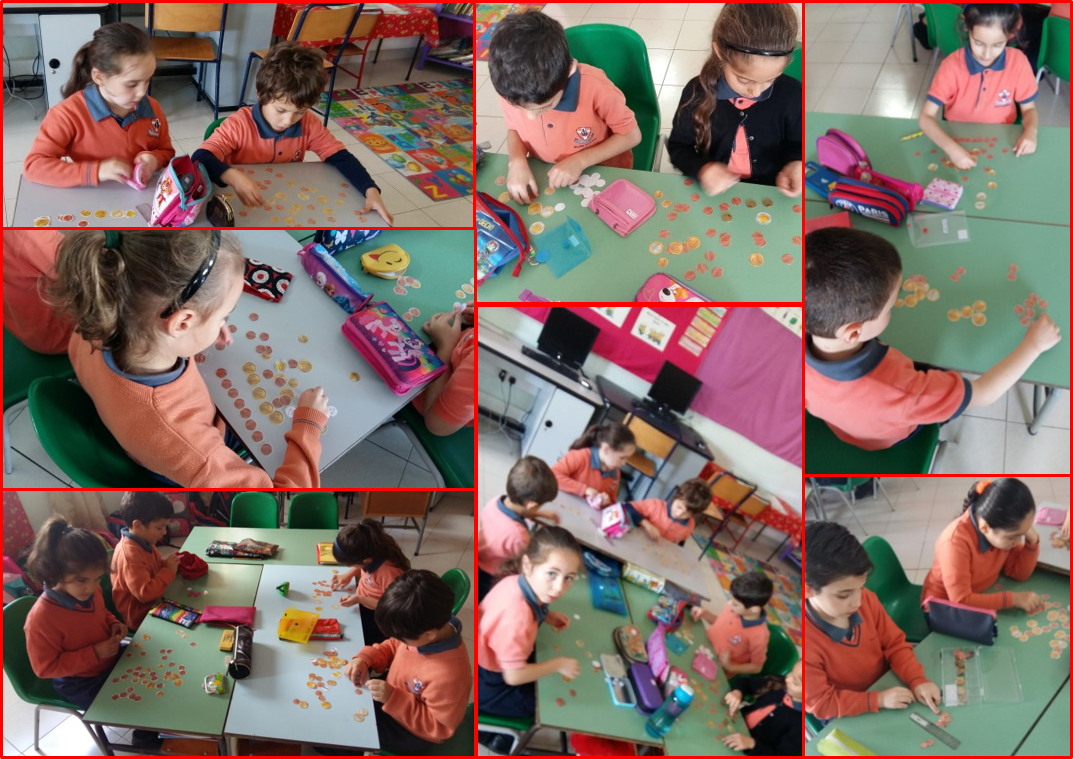 Learning Maths can be tricky. However when students are presented with Maths in a fun way, learning becomes more meaningful. These year 2 students can be seen exploring different ways of using coins to make up the same value, while working in groups and discussing the various options.
Submitted by Ms Janice Vella Muscat, Class Teacher

The learning objective of the Mathematics lesson was to add one to a number, up to 10.
Students were divided in pairs and each pair was given a ten-frame and ten snap cubes. A number was given to them, and they had to count that amount of snap cubes and put them on the ten-frame, then each time adding another snap-cube to the amount already told. Finally they had to count the snap cubes together.
They were also presented with an interactive presentation. They had to add one more Gingerbread man.
With these two activities students learnt that when they add ‘one’ to a number ‘the answer’ is always the following number.
Children’s involvement levels indicated that they enjoyed themselves throughout this learning objective.
Submitted by Ms Mathea Vassallo, Yr 1.2 Teacher