Exploring Flat Shapes

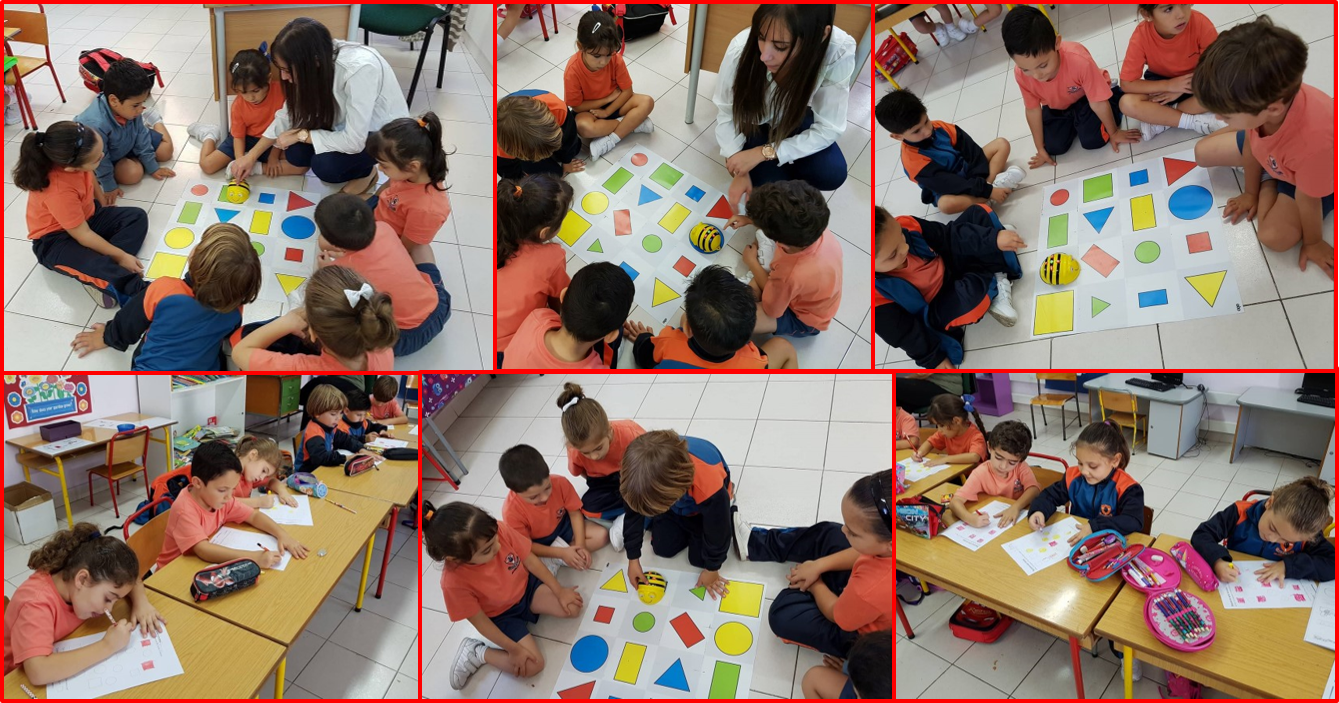
The Yr 1.2 students have been exploring flat shapes (2-d shapes). Students made use of the Bee-Bot to sort out shapes.  Using a Bee-Bot promotes counting skills and directional language. Afterwards they worked in pairs to sort whether the shape was a circle or a square. Children had a great time 🙂

Submitted by Ms Mathea Vassallo, Yr 1.2

Counting Money

During a Mathematics lesson students were divided in groups. Each group was given a handout and some coins.  Students had to use coins to make the amounts written on the Interactive Whiteboard (IWB).  After, each group told the class what coins they used to make the given amounts. These were then written on the IWB.  Students realized that even though some of the groups used different coins they still made the same amount.  Furthermore, they also pointed out which group used the least amount of coins to make the given amounts.  

Submitted by Ms Miranda Cauchi, Yr 3.1

Teaching Maths through a concrete, pictorial and abstract approach

Learning Maths can be challenging for students if not presented using various teaching and learning approaches. Not all students learn in the same way, but learning through concrete and hands-on experiences allows for more student success.

Following training teachers receive during their in-service courses and also during professional development sessions, students benefit from learning experiences which meet the needs of all students.

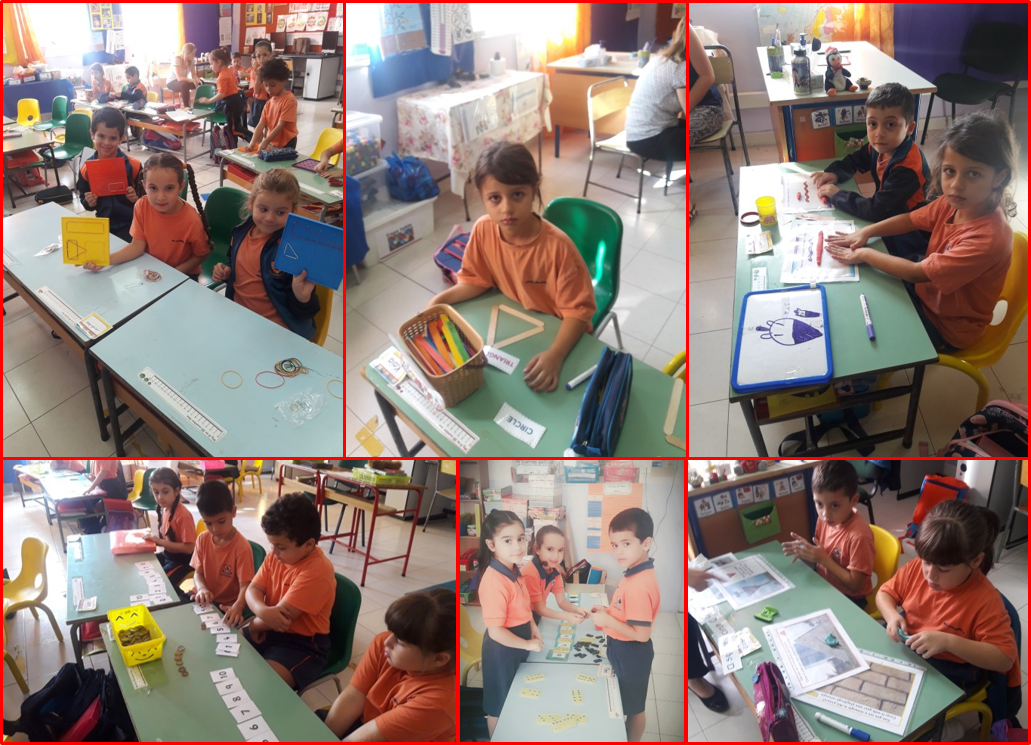
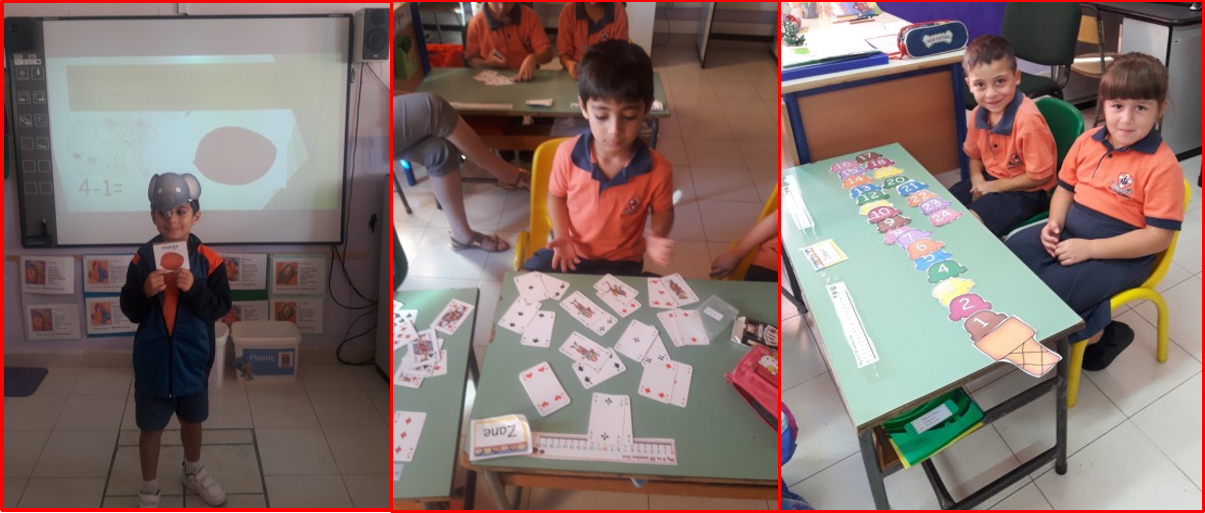
In the above photos we can see evidence of the successful methodologies being introduced in our school. The Yr 2.1 students of Ms Stephanie Azzopardi can be seen doing various activities including  learning about shapes, ordering numbers (using dominoes), adding numbers using the number line and technology (going forward using the bee-bot and mat), learning subtraction through stories (Handa’s Surprise) and learning about pairs of 5 using playing cards and interlocking cubes.

Students in Year buzzing as a bee…

The Year 2 students of Ms Stephanie are always busy working. Hands-on activities at such an early age are necessary for learning to be more meaningful.  Various maths activities are prepared on a daily basis for students to engage in their learning.
Like all other classes, these students are participating in Dinja Waħda activities. Students learn about the migration of birds and why the importance of preserving nature.


Students  work in pairs and in groups during Maltese and English lessons. Paired work allows time for students to think about their learning without worry of making mistakes. It also provides time for students to learn from each other and to discuss various ways to solve problems.
Lessons are always made as interesting as can be to ensure that students enjoy learning. Various resources are used to provide students with alternative tools to learn.

3-D Shapes

During a Maths 3D shapes lesson, nets were displayed on the board and the students, in groups, had to draw the nets and create the 3D shapes. The names of the 3D shapes were then matched to the shapes and the numbers of faces, vertices and edges of each shape were discussed and noted. 

Submitted by Mr Matthew Cassar, Yr 6.2 Teacher

Estimation

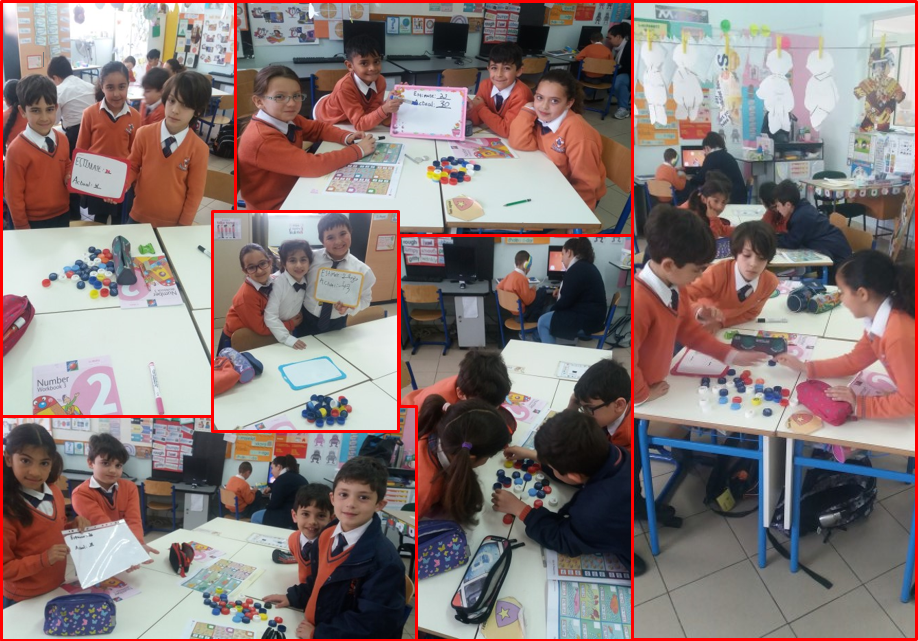
The year 3.1 students were learning about estimation through hands on activities. One of our activities was to guess (estimate) how many bottle caps I placed in a container. The students estimated the number and then, we counted all the bottle caps to verify the actual number and match it to the students’ estimations.

During a similar activity, the students worked in groups. Each group took their desired amount of bottle caps from a box. Their task was to estimate the number of bottle caps and then, count them to check how many there really were.

Submitted by Ms Sharon Calleja, Yr 3.1 Teacher

Division (as grouping) – yr 3.1

One of our Mathematics topics was division (as grouping). The children participated in group work, during which each group was given a different amount of bottle caps. They had to count how many bottle caps in all and group them according to the instructions given. For instance, one group was given 25 bottle caps and they were instructed to group them into groups of 5. Then, they had to count how many groups were created and write the corresponding division sum i.e. 25 / (division by) 5 = 5. At the end of the lesson, each group presented their work to the rest of the class. It was a fun hands on activity that helped the students understand the concept of division as grouping.

On another day, the students were engaged in a similar activity however, this time, the group members chose the amount of bottle caps themselves. They also chose into how many groups they were going to divide the bottle caps themselves. They discussed this as a team, got the number of bottle caps needed, grouped them accordingly and wrote down the corresponding division sum.

Finally, to make sure that the students understood the concept of division well, they participated in 4 different activities to revise this topic.  All 4 activities were going on at the same time, as the students then, rotated activities after a specified time. The activities were as follows:

  • Beebot game – Moving the Beebot on a division sum, working it out and checking the answer.
  • Board game – Throwing a dice and uncovering a part of the board game with that number. Working out the division sum uncovered and checking the answer overleaf.
  • Matching game – Matching cards with division sums to their correct answers.
  • Handout – as consolidation of the topic.

Submitted by Ms Sharon Calleja, Yr 3.1 Teacher

Learning by doing…

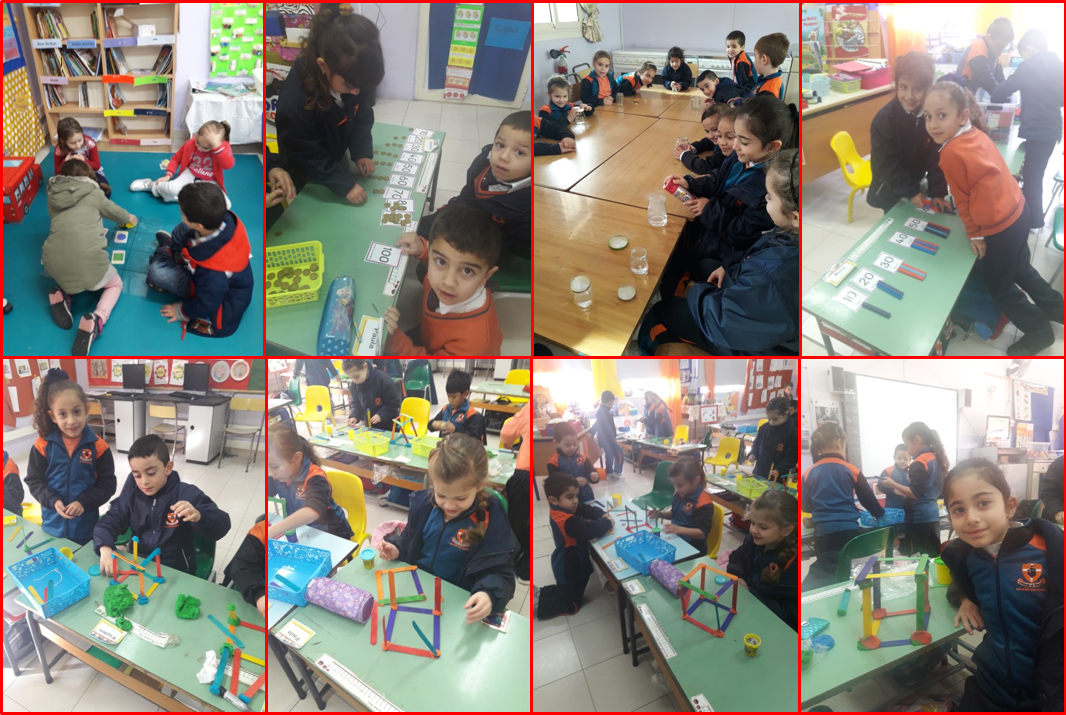
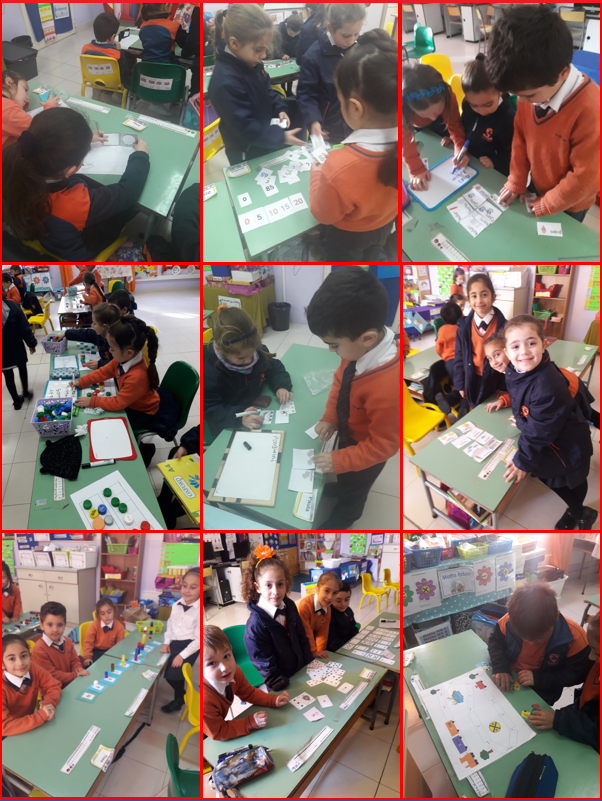
The Yr 2.2 students of Ms Stephanie are always very busy. Their lessons involve many hands-on activities which allow the students time to learn, think and relearn. In the above photos students had to build cubes using lollipop sticks. They also had a go a investigating counting in tens and how to make a cloud in a jar. Below students were given tasks to sort numbers in order, to learn about odd and even, plurals and story sums.